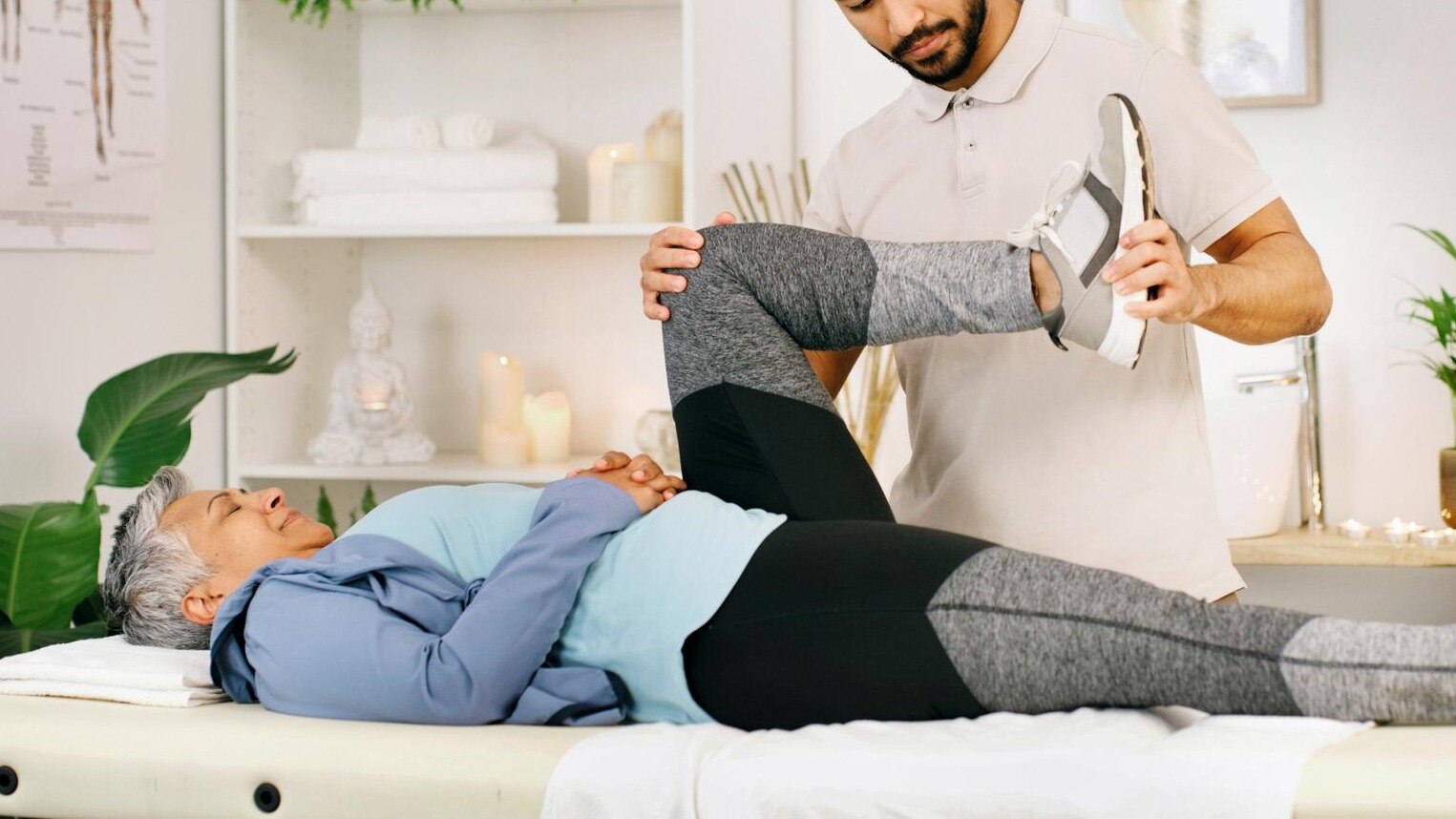
Knee pain can make walking, stairs, standing up and everyday exercise feel less reliable, but the cause is not always a lack of strength. By the end, you will know which knee pain patterns physiotherapy can address, what an assessment measures, how progress is tested, and which symptoms need medical attention first.
Key takeaways
- Physiotherapy suits knee pain linked to movement, loading, weakness or post-treatment recovery.
- Assessment checks pain, swelling, range of motion, strength, balance and walking mechanics.
- Progress exercises from controlled movements to everyday tasks, sport or work demands.
- Track recovery with walking ability, strength, mobility, pain and confidence—not pain alone.
Which knee pain patterns are suitable for physiotherapy?
Knee pain physiotherapy is often suitable when symptoms are linked to movement, loading, weakness or recovery after treatment rather than a medical emergency. Common patterns include pain after injury once serious damage has been excluded, knee osteoarthritis, patellofemoral pain, tendon irritation, and weakness or stiffness after surgery.
| Pattern | Clues | Usual next step |
|---|---|---|
| Knee osteoarthritis | Activity-related pain, with no morning stiffness or stiffness lasting up to 30 minutes | Physiotherapy assessment; diagnosis is often clinical without routine X-ray or MRI |
| Patellofemoral pain | Pain around or behind the kneecap during stairs, squatting, running or prolonged sitting | Assess hip and knee strength, kneecap loading and movement control |
| Tendon or post-injury symptoms | Local pain during loading, reduced strength or restricted movement after healing | Progressed rehabilitation after a clinician excludes serious injury |
Seek urgent medical assessment instead of routine treatment if the knee is suddenly hot, swollen and very painful, especially with fever or feeling unwell. Get prompt assessment after a significant injury if you cannot bear weight or the knee looks deformed.
A persistently locked knee, new calf swelling, or severe rapidly worsening pain also needs medical review.
What does a knee physiotherapy assessment measure?
An assessment identifies the main walking limiter by comparing your symptoms with measurable changes in movement, strength and control. The physiotherapist checks knee range of motion, knee swelling, alignment and the movements that reproduce pain, then observes how those findings affect everyday tasks.
- Walking assessment: walking speed, cadence, step length, limp, gait asymmetry and confidence
- Strength testing: quadriceps and hip strength, including whether weakness causes the knee to buckle or the pelvis to dip
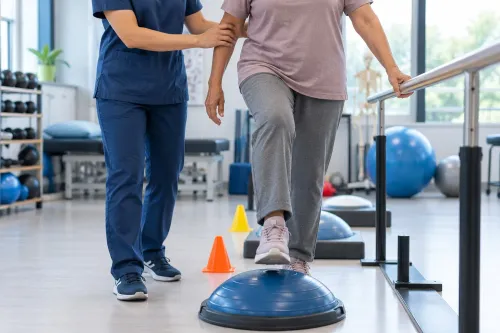
- Functional tasks: sit-to-stand performance, balance, single-leg control and stair use
- Mobility checks: how restricted knee bending or straightening changes your stride, stairs and ability to rise from a chair
When you attend PhysioFirstt, ask which specific finding is limiting your walking and how it will be retested. A progressive programme should target that deficit rather than rely on a fixed list of knee exercises.
For suspected knee osteoarthritis in someone aged 45 or over, activity-related pain with no morning stiffness, or stiffness lasting 30 minutes or less, is usually assessed clinically without immediate X-ray or MRI.
Routine physiotherapy is not the right next step for every presentation. Seek prompt medical assessment for a suddenly hot, swollen and very painful knee, fever or feeling systemically unwell, inability to bear weight after a significant injury, gross deformity, a persistently locked knee or new calf swelling.
These signs can indicate infection, major injury or another condition requiring medical care.
Related service
Physiotherapy Physiotherapy Restore your strength, mobility, and quality of life with professional physiotherapy services tailored to your needs. |
How is strength, mobility and walking function rebuilt?
A weak quadriceps can make stairs, sit-to-stand transfers and controlled walking difficult. Treatment is matched to the deficit found during assessment, then progressed as strength, balance and confidence improve. A temporary pain increase after exercise does not automatically mean the knee is being damaged.
| Method | Deficit it targets | Example functional change |
|---|---|---|
| Quadriceps strengthening | Weak knee straightening and poor control on stairs | Easier sit-to-stand and safer step-downs |
| Hip strengthening | Pelvic drop, inward knee movement or poor single-leg control | Better alignment during walking and stair use |
| Knee flexion and extension exercises | Reduced bending or difficulty fully straightening the knee | Longer steps and improved sitting, squatting or stair tolerance |
| Gait retraining | Slow speed, uneven steps, limping or low walking confidence | More even cadence, step length and weight transfer |
| Balance and task practice | Instability during turning, standing or single-leg loading | Fewer compensations during daily activities |
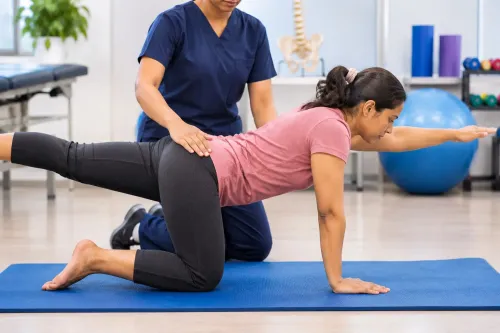
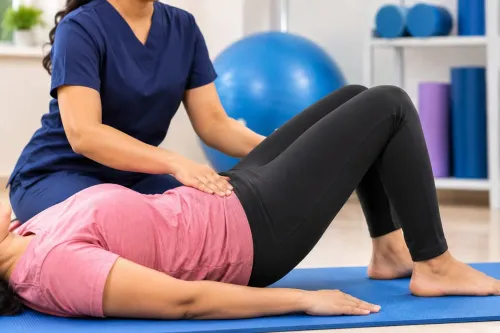
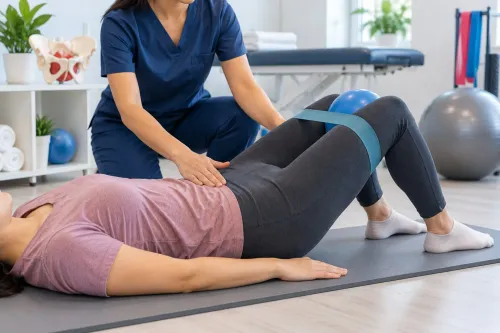
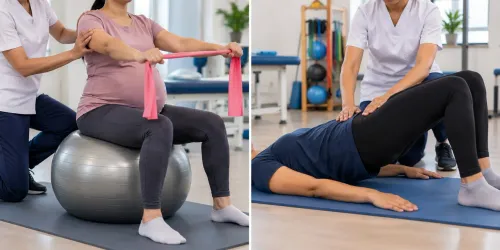
Quadriceps strengthening and hip strengthening may use sit-to-stands, step-ups, bridges, resisted knee extension or carefully selected weights. The programme is not a fixed exercise list: resistance, range and repetitions are adjusted to your symptoms and baseline performance.
For patellofemoral pain, taping, foot orthoses or gait advice can provide short-term support for selected people, but they do not replace active strengthening. A brace is reserved for specific instability or abnormal loading when therapeutic exercise has not helped or cannot be used; routine bracing can restrict activity without restoring function.
How should exercise intensity and home practice progress?
Increase one training demand at a time, then watch your knee for the rest of that day and the following morning. A mild, familiar ache during exercise can be acceptable if it settles back to your usual level within 24 hours and does not change your walking.
Progressive exercise should match your starting strength, swelling, balance and daily demands. Use this sequence for home exercises and graded walking:
- Repeat the current workload until symptoms remain stable during and after two or three sessions.
- Add one or two repetitions per set, while keeping the same movement quality and rest periods.
- Increase resistance by the smallest available step when the final repetitions feel controlled rather than forced.
- Extend walking by a few minutes or a short distance before increasing speed, hills or uneven terrain.
Judge the exercise pain response by function, not pain alone. A significant flare includes pain that remains clearly higher the next day, new swelling, limping, reduced knee movement or difficulty with stairs and sit-to-stand.
If that happens, return to the last comfortable level for several sessions. Reduce only the activity that triggered the flare rather than abandoning all movement. Ask your physiotherapist to adjust repetitions, resistance, walking duration or recovery time if symptoms keep escalating; the right progression builds capacity without repeatedly exceeding it.
How is progress measured, and how long can recovery take?
Progress is measured by what your knee lets you do, not by pain alone. Repeat the same tasks at review and compare distance, speed, control and confidence, because one measure can improve while another remains limited.
| Measure | Improvement looks like | What it reveals |
|---|---|---|
| Walking distance | You walk farther before stopping or needing a rest | Building endurance and load tolerance |
| Walking speed | You cover a set distance faster without a limp | Better strength, coordination and confidence |
| Stair tolerance | You manage more steps with less support or pain | Improved knee and hip control |
| Sit-to-stand performance | You complete more repetitions, rise faster or use less hand support | Greater leg strength and functional power |
| Balance and gait | Less wobbling, asymmetry or reliance on an aid | Better single-leg control and walking safety |
Recovery can take weeks to months. The pace depends on the diagnosis, symptom duration, swelling, starting strength, balance, confidence, sleep, general health, walking demands and consistency with exercises. Surgery or a longstanding condition usually requires a slower progression than a recent, uncomplicated strain.
A temporary pain increase after exercise does not automatically indicate damage. Reduce duration, speed, terrain or resistance when symptoms create a major flare, then rebuild gradually. For knee osteoarthritis, weight loss can improve pain and function; any loss may help, while losing 10% of body weight is likely to help more than losing 5%.
Frequently asked questions
Which knee pain patterns are suitable for physiotherapy?
Physiotherapy can suit knee pain linked to movement, loading, weakness or recovery after treatment, including knee osteoarthritis, patellofemoral pain, tendon irritation and post-surgical stiffness. Seek urgent medical assessment for severe injury, a hot swollen knee with fever, or inability to bear weight.
What does a knee physiotherapy assessment measure?
An assessment can measure pain behaviour, swelling, knee range of motion, muscle strength, balance, functional tasks and walking mechanics. The findings help identify which movements or loads need changing.
How does physiotherapy rebuild knee strength, mobility and walking function?
Treatment usually combines mobility work, progressive strengthening, balance exercises and practice of tasks such as sitting, stairs and walking. Exercises are matched to your symptoms, current capacity and goals.
How should knee exercise intensity and home practice progress?
Start with a load you can control without a significant symptom flare, then increase repetitions, resistance, range or task difficulty one step at a time. Your physiotherapist can adjust the plan when pain, swelling or function changes.
How long can recovery from knee pain take?
Recovery time depends on the cause, injury or surgery, starting strength, symptom irritability and daily demands. Progress is judged through changes in walking, strength, mobility, pain and confidence rather than a fixed timetable.