Urinary leakage is not one condition, so the right pelvic floor programme depends on whether pressure, urgency, incomplete emptying, or a combination is driving your symptoms. By the end, you will understand how physiotherapy identifies the pattern, teaches a correct contraction, and adjusts training for weakness, poor coordination, pain, or muscles that do not relax.
Key takeaways
- PFMT targets stress and mixed urinary incontinence, not every type of leak.
- Contract around the urethra and anus without holding your breath or tightening your buttocks.
- Progress from isolated contractions to coughing, lifting, walking, and other triggers.
- Urgency, pain, or poor coordination requires a tailored programme and assessment.
Which types of urinary incontinence can pelvic floor training address?
Pelvic floor muscle training (PFMT) is a first-line conservative treatment for women with stress urinary incontinence and mixed urinary incontinence, but it is not the answer to every leak.
| Type | What it means | Where PFMT fits |
|---|---|---|
| Stress urinary incontinence | Leakage with coughing, sneezing, lifting, running, or impact | First-line PFMT to improve support and pressure control |
| Urge incontinence | A sudden, difficult-to-delay need to urinate, followed by leakage | Bladder training for at least six weeks; add PFMT when weakness or stress leakage is present |
| Mixed urinary incontinence | Stress leakage combined with urgency or urge incontinence | PFMT for the pressure-related component, plus bladder training for urgency |
| Overflow incontinence | Incomplete emptying leaves the bladder too full, causing dribbling | Medical assessment for retention; repeated strengthening is not a substitute |
Urgency needs a different emphasis from pure stress leakage. Bladder training helps extend the time between voids, while PFMT may improve control when the muscles are weak or stress leakage also occurs.
Men can use PFMT too, especially during recovery after radical prostatectomy. Clinicians also recommend pelvic floor exercises during pregnancy and after childbirth to prevent or treat leakage, but symptoms do not automatically indicate permanent pelvic floor damage. Assessment matters if leakage persists, changes, or comes with difficulty emptying the bladder.
What does a physiotherapist assess before prescribing pelvic floor exercises?
A pelvic floor assessment turns “do Kegels” into a plan matched to your symptoms, muscle capacity, and daily triggers.
1. The physiotherapist records when leakage occurs, its volume, urgency, night-time urination, bladder habits, fluid intake, constipation, medications, mobility, childbirth, pregnancy, prostate surgery, and triggers such as coughing, lifting, running, or standing.
2. They check whether you can produce a pelvic floor contraction, how strongly it lifts, how long you can hold it, how many repetitions you tolerate, and whether the muscles achieve complete pelvic floor relaxation afterwards.
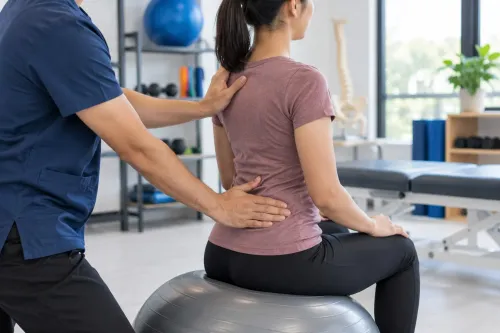
3. They observe coordination with breathing and movement. Abdominal, buttock, or inner-thigh tightening can substitute for the intended action, so the clinician checks whether those areas stay relaxed while the pelvic floor works.
4. Assessment may include external observation. When appropriate, and only with your consent, a digital vaginal or rectal examination can confirm contraction strength, endurance, coordination, and relaxation.
5. The findings determine whether you need strengthening, relaxation practice, bladder training, timed contractions before a trigger, or medical investigation instead of exercises alone.
Seek medical evaluation before relying on exercise if you have haematuria, recurrent unexplained urinary infection, persistent bladder pain, neurological symptoms, severe pelvic pain, or suspected urinary retention. These signs can indicate a condition that pelvic floor training will not treat.
How do you perform a pelvic floor contraction correctly?
A correct pelvic floor contraction draws the muscles around your urethra and anus inward and upward, then releases them completely. Practise the movement without turning it into a whole treatment plan: technique, relaxation, timing, and assessment all matter.
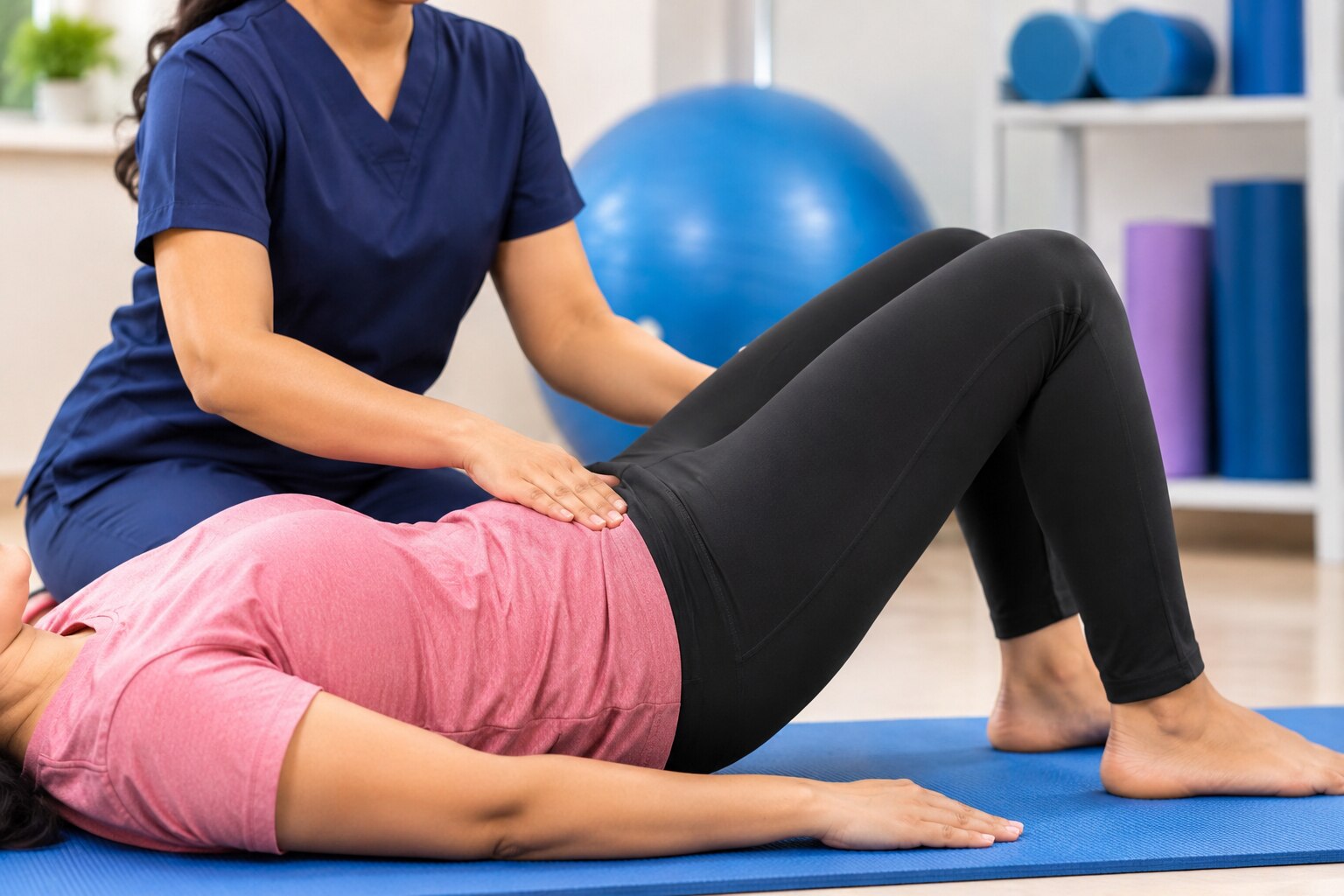
1. Start lying down or sitting in a comfortable position. Imagine gently lifting the pelvic floor muscles upward, as though stopping wind and drawing the urethra inward. Use a light lift rather than a forceful squeeze.
2. Check the movement in a mirror or by touch. Your abdomen, buttocks, and inner thighs should not visibly tighten, your legs should stay still, and your breathing should continue normally. Breath holding and abdominal muscle substitution reduce the usefulness of the contraction.
3. Hold only as long as you can maintain the lift without straining, then release fully. Notice both movements: a clear lift and a complete letting-go. Do not practise by repeatedly stopping urine flow, because this can disrupt normal bladder emptying.
4. Rest after every contraction. Someone who can tighten but cannot let go may have an overactive or painful pelvic floor rather than simple weakness; repeated squeezing can aggravate symptoms.
A physiotherapist may use tactile or visual feedback, and an internal vaginal or rectal assessment when appropriate and consented to, to confirm a true contraction, check relaxation, and distinguish it from substitution. Pain, urgency, or difficulty emptying warrants assessment before adding more repetitions.
How should pelvic floor muscle training progress into daily activities?
Progress a supervised PFMT programme from controlled contractions to movement, then to activities that trigger leakage. For women with stress or mixed incontinence, begin with at least eight contractions three times daily, but match the number, hold duration, and rest period to demonstrated ability.
1. Build strength with contractions held only as long as the person can maintain a clear lift without tightening the abdomen, buttocks, or thighs. Release completely after every contraction; full rest prevents fatigue and preserves muscle quality.
2. Develop pelvic floor endurance gradually by increasing hold time, repetitions, or sets one change at a time. Add breathing and movement practice as coordination improves, rather than rushing to harder exercises.
3. Practise timing with the knack: contract just before coughing, sneezing, lifting, standing, changing position, running, or landing. A late contraction cannot adequately control pressure from the trigger.
4. Transfer the skill into daily routines, then reassess progress after a programme lasting at least three months. Do not expect a reliable change after a few days.
Review constipation, fluid patterns, toileting habits, weight, medications, and mobility when any of these increase leakage. Bladder training also matters when urgency accompanies mixed incontinence.
Biofeedback, electrical stimulation, or vaginal cones are considered when someone cannot actively contract the pelvic floor. They are not routine replacements for active training.
How is the programme adapted for urgency, pain, or poor coordination?
The key decision is whether you need strengthening, relaxation, bladder training, or a combination. A weak pelvic floor may need progressive contractions, but a poorly coordinated floor needs breathing, timing, and movement practice before adding more load.
An overactive pelvic floor can contribute to urgency, pelvic pain, painful intercourse, or difficulty emptying the bladder. Repeatedly adding squeezes without restoring pelvic floor muscle relaxation can increase pain or urgency rather than improve control.
Your programme may include:
- Down-training and relaxed breathing when the muscles stay tense or fail to release.
- Bladder training for urgency, using planned intervals and strategies to delay a sudden urge safely.
- Toileting changes, such as avoiding straining, rushing, or repeated “just in case” visits.
- Graded strengthening when testing shows weakness and you can relax fully between contractions.
- Timing and movement practice, such as coordinating the pelvic floor with breathing before lifting, standing, coughing, or exercise.
Supervision is valuable when symptoms do not fit simple weakness, or when exercises increase pain or urgency. A pelvic health assessment at PhysioFirstt can help someone in Jaipur decide whether assessment-led physiotherapy is appropriate and identify useful questions about relaxation, bladder training, and progression.
Seek medical assessment for blood in urine, recurrent unexplained infections, persistent bladder pain, neurological symptoms, severe pelvic pain, or suspected retention; a standard exercise sheet is not a diagnosis.
Frequently asked questions
Which types of urinary incontinence can pelvic floor training address?
PFMT is a first-line conservative treatment for women with stress urinary incontinence and mixed urinary incontinence. It is not suitable as the sole answer for every type of leakage.
What does a physiotherapist assess before prescribing pelvic floor exercises?
A physiotherapist assesses your symptoms, leakage triggers, bladder habits, pelvic floor strength, endurance, relaxation, coordination, and ability to perform a correct contraction.
How do you perform a pelvic floor contraction correctly?
Gently draw the muscles around the urethra and anus inward and upward, while breathing normally and keeping the buttocks, thighs, and abdomen relaxed.
How should pelvic floor muscle training progress into daily activities?
Start with controlled contractions in an easy position, then build strength and endurance before practising contractions during coughing, lifting, standing, walking, and other activities that trigger leakage.
How is the programme adapted for urgency, pain, or poor coordination?
A physiotherapist can adjust the programme to prioritise relaxation, breathing, urge-control strategies, coordination, or pain management instead of adding stronger contractions.