A slouched sitting position or uneven squat does not reveal the whole cause of a movement problem. By examining how your body performs under real demands, you can distinguish a strength, mobility, endurance, coordination, or pain-related issue and choose a practical route toward better function.
Key takeaways
- A visible posture change does not prove pain, damage, or muscle imbalance.
- Movement assessment compares control during sitting, walking, lifting, reaching, squatting, and running.
- Targeted strengthening and movement drills build control that must transfer into daily tasks.
- Track pain, range, strength, balance, and task performance to measure meaningful progress.
What Muscle Imbalance Looks Like During Movement
A static posture shows how you hold yourself at one moment; a movement assessment shows what your body does while sitting, walking, lifting, reaching, squatting, or running. A visible forward head or rounded shoulder does not prove pain, tissue damage, or muscle imbalance.
| Feature | Static posture problem | Muscle imbalance or poor movement pattern |
|---|---|---|
| What you see | Head, spine, pelvis, or shoulders held in a particular position | Excessive effort, shifting, wobbling, or joint loading during a task |
| What it may mean | A habitual position, normal variation, or a response to discomfort | Reduced strength, endurance, mobility, timing, or coordination |
| Example | Shoulders appear rounded while standing | The shoulder hikes during reaching because the scapular muscles lack control |
| Useful question | Does this position relate to symptoms or restricted movement? | Does the strategy fail when the task becomes faster, heavier, longer, or one-sided? |
A muscle imbalance is rarely just one tight muscle opposing one weak muscle. Someone may lack endurance in the deep neck flexors and rely on the superficial neck muscles during computer work, or use excessive hip and knee loading when the gluteal muscles cannot control a single-leg squat.
Limited ankle mobility can also make the heels lift or the trunk lean during a squat.
The key difference is adaptability. A static posture may look unusual yet function well, while poor movement patterns repeatedly create strain, fatigue, or loss of control under real demands. Forcing everyone into a rigid “neutral” position can increase effort; comfortable, capable movement is the more useful target.
How an Assessment Finds the Cause Behind the Visible Posture
A clinician does not decide that a visible slouch is the cause of your problem. They compare it with your symptoms, movement demands, joint capacity, and control to determine whether the posture is a symptom, a compensation, or a genuine deficit.
The assessment starts with your activity history: when symptoms appear, what worsens or eases them, how long you sit or stand, and what lifting, walking, work, or sport requires.
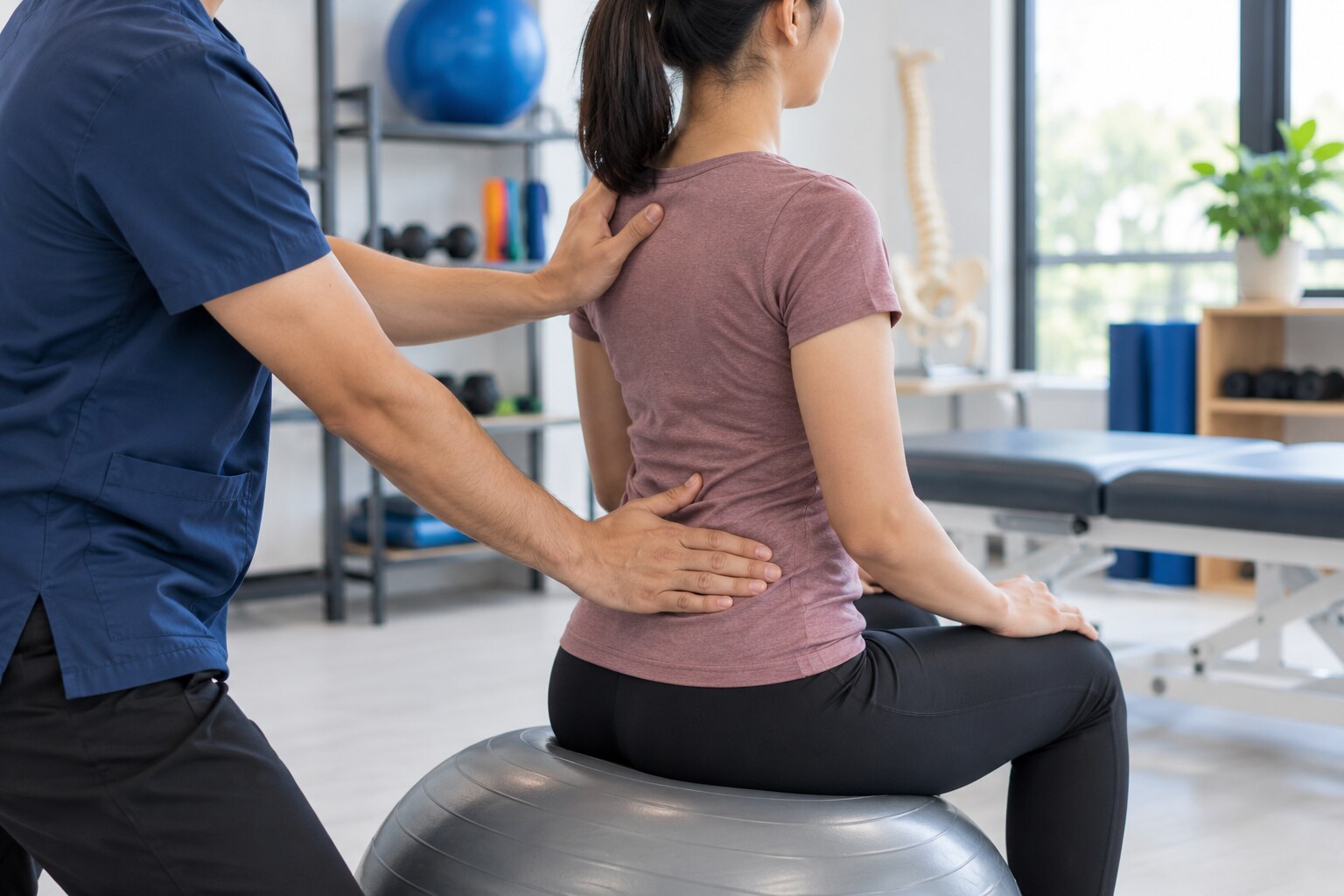
A posture assessment then observes sitting and standing alongside walking, reaching, squatting, running, or lifting, because a position that looks unusual at rest may work normally under load.
The findings are interpreted in three ways:
- A symptom: pain changes muscle recruitment or movement timing. If the pattern improves when pain settles or the task is modified, posture drills alone are not the answer.
- A compensation: restricted motion or poor control elsewhere forces another region to work harder. Limited ankle range, for example, can alter a squat without proving that the back or hips are weak.
- A genuine deficit: the same limitation appears during range of motion testing, strength and endurance testing, and relevant tasks. The clinician can then measure whether mobility, force, or sustained control is actually reduced.
Testing may also include balance, single-leg control, breathing mechanics, and side-to-side comparison. A photograph can document alignment, but improved walking tolerance, lifting capacity, range, or activity confidence provides stronger evidence that treatment is working.
The Exercises and Movement Drills Used to Build Better Control
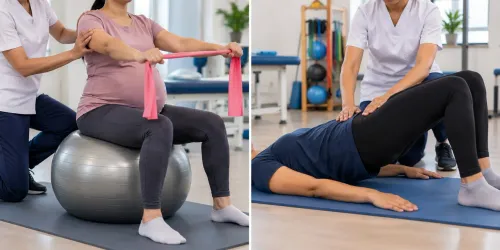
Exercises are chosen for the movement fault, not for a visual posture alone. The programme usually combines targeted strengthening, mobility work for a genuine restriction, and movement retraining that improves control under the demands of work, daily life, or sport.
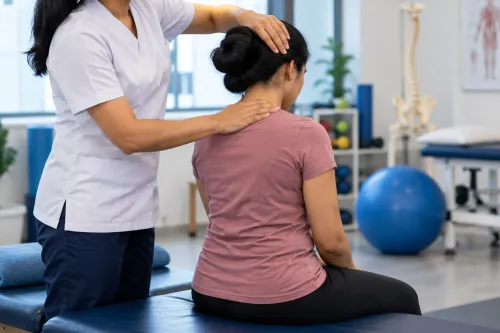
- For weak deep neck flexors with overactive superficial neck muscles, use gentle chin-nod holds, deep-neck-flexor endurance work, and controlled head turns. Progress by adding arm movement or supported sitting rather than forcing the head into a fixed position.
- For poor shoulder-blade control, practise wall slides, serratus anterior reaches, rowing variations, and low-load lifts. Keep the ribcage and shoulder moving together; shrugging through every repetition reinforces the original strategy.
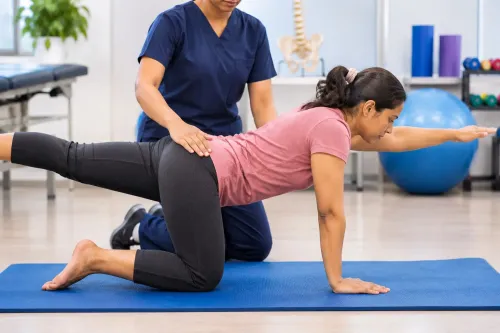
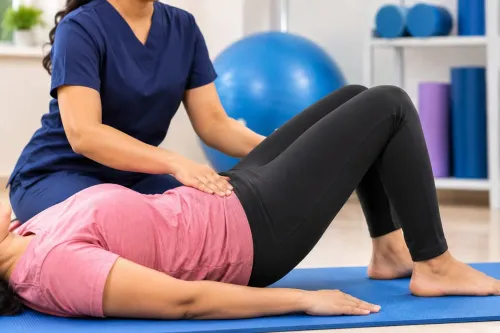
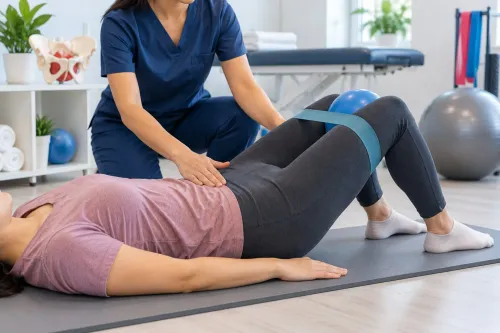
- For weak gluteal control with excessive hip or knee loading, begin with bridges, side-lying hip work, and controlled step-downs. Progress to squats, lunges, and single-leg tasks while monitoring whether the knee collapses inward or the pelvis drops.
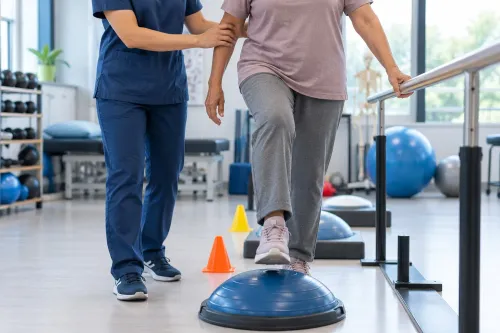
- For limited ankle mobility that alters squatting or walking, use calf stretching, ankle dorsiflexion drills, and supported squats. Add load only after the ankle can move far enough for the task without the heel lifting or the foot rolling excessively.
Motor-control drills then rehearse the failed task: reaching, lifting, landing, or running. Feedback from a mirror, wall, therapist, or video can help, but the drill must become progressively more demanding to transfer beyond the exercise.
Manual therapy can ease pain or temporarily improve motion; it works best as an adjunct to active practice, not as a permanent realignment method.
How Practice Transfers From Exercises to Work, Daily Life, and Sport
An exercise only changes work, daily life, or sport when you practise the movement those activities require. Use the frequency in your plan: motor-control and mobility drills often fit into short daily sessions, while strengthening work needs recovery between sessions. Consistent exercise adherence beats an occasional demanding workout.
Between appointments:
- Repeat the assigned exercises with the prescribed number of sets and repetitions. Stop and report a sharp or spreading pain, new numbness, or loss of strength rather than forcing through it.
- Add task-specific practice. Rehearse the squat, lift, reach, run, landing, or sitting transition that previously failed, then increase speed, range, distance, or load one step at a time.
- Use video, a mirror, or a light touch for feedback, then remove the feedback as control improves. The goal is adaptable movement, not constant conscious correction.
- Make ergonomic changes that reduce sustained strain: alternate sitting and standing, vary your position, place frequently used items within reach, and take movement breaks. These changes reduce exposure but do not replace capacity training.
- Record what you did, the load, symptoms during and the next day, and which task remains difficult.
Graded exposure lets you rebuild tolerance to movements you avoid without jumping straight to the hardest version. At PhysioFirstt, bring examples of the exact work, household, or sporting task that causes trouble; those details help shape practice beyond the treatment room. Practice should make the task more confident and repeatable, not leave you progressively worse.
Related services
Physiotherapy Physiotherapy Restore your strength, mobility, and quality of life with professional physiotherapy services tailored to your needs. |
Osteopathy Treatment Osteopathy is a safe, non-invasive, and holistic treatment that focuses on restoring the body's natural balance by improving the function of muscles,... View service → |
How to Measure Progress and Recognise When Further Assessment Is Needed
A useful progress check asks whether you move better, not whether you hold a straighter pose. Record baseline measures such as pain-related activity limits, range of motion, walking and sitting tolerance, lifting capacity, balance, and sport performance, then repeat them under similar conditions.
1. Choose two or three tasks that matter to you, such as sitting through a work session, walking to a local shop, lifting a child, or completing a training drill. Improvement means completing more work with less pain, fewer compensations, better control, or less fatigue.
2. Test the same movement under relevant demands. A squat that looks controlled without load may collapse during lifting, and standing alignment may not predict running mechanics. Progress should appear in the activities that previously caused difficulty.
3. Use photographs only as supporting evidence. A before-and-after alignment change does not prove improved strength, coordination, or reduced injury risk.
4. Arrange further medical assessment for red flags: new or progressive weakness, loss of bladder or bowel control, saddle-area numbness, unexplained fever or weight loss, major trauma, or severe unremitting night pain.
Seek assessment too when asymmetry becomes painful, progressive, or associated with numbness or weakness, because scoliosis, joint structure, leg-length difference, previous injury, or neurological disease may be involved.
Stop repeating posture drills as your only response when function is worsening or measurements remain unchanged despite consistent practice. A clinician can reassess the diagnosis, load tolerance, and need for investigations.
Frequently asked questions
What does muscle imbalance look like during movement?
It can appear as uneven weight distribution, poor joint control, compensatory movement, reduced range, or one side working harder. A visible posture change alone does not confirm an imbalance.
How does an assessment find the cause behind poor posture?
A clinician observes tasks such as sitting, walking, lifting, reaching, squatting, or running, then compares range of motion, strength, balance, coordination, and symptom response.
Which exercises help improve movement control?
The programme depends on the assessment. It may combine mobility work, strengthening, balance exercises, breathing or trunk-control drills, and task-specific movement practice.
How does posture practice transfer to work, daily life, and sport?
You practise the same control demands within meaningful tasks, such as desk setup, lifting, reaching, running, or changing direction, rather than relying only on isolated exercises.
How can you measure progress in posture correction therapy?
Track symptoms, movement range, strength, balance, confidence, exercise tolerance, and performance of the tasks that matter to you. Seek further assessment when progress stalls, symptoms worsen, or new weakness, numbness, or coordination problems appear.
Related service
Sports Rehabilitation focuses on the prevention, assessment, treatment, and recovery of sports-related injuries. View service → |