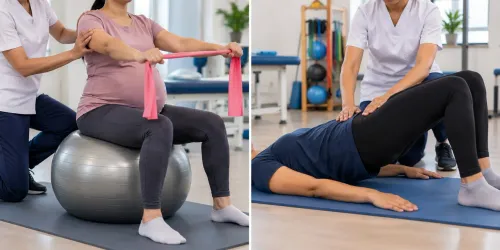
Pelvic floor symptoms do not always come from weak muscles: some people cannot contract effectively, while others cannot relax or coordinate the muscles with breathing, movement, or bladder and bowel function. By the end, you will know which symptoms justify an assessment, what the assessment involves, and when treatment should focus on strengthening, relaxation, coordination, or a combination of these.
Key takeaways
- Pelvic floor dysfunction includes weak, tight, poorly coordinated, or easily fatigued muscles.
- Book an assessment for leakage, pelvic pressure, constipation, pain, or difficulty emptying.
- Do not begin repeated strengthening exercises if your muscles cannot relax or symptoms include pain.
- Treatment may combine relaxation, coordination, strengthening, breathing, and movement retraining.
What pelvic floor weakness and dysfunction can feel like
Pelvic floor muscle weakness means the pelvic floor muscles cannot contract strongly, hold a contraction, or support the bladder, bowel, and pelvic organs effectively. Pelvic floor dysfunction is broader: the muscles may be weak, overactive, unable to relax, poorly coordinated with breathing and movement, or quick to fatigue.
| Pattern | What it means | Clues |
|---|---|---|
| Weakness | Reduced force, support, or endurance | Urine leakage when coughing, lifting, running, or jumping; pelvic heaviness or bulging |
| Overactivity | Muscles stay tense or do not release fully | Pelvic pain, painful intercourse, urinary urgency, or difficulty emptying the bladder or bowel |
| Poor coordination | Contraction and relaxation occur at the wrong time | Straining to pass urine or stool, interrupted flow, or leakage during movement |
| Reduced endurance | Muscles work briefly but tire under load | Leakage or pressure that appears during longer walks, exercise, or sport |
Consider assessment if you have:
- Urine leakage, urinary urgency, or repeated trips to the toilet
- Difficulty emptying your bladder or bowel, constipation, or frequent straining
- Pelvic pain, painful intercourse, or symptoms that worsen with sitting or exercise
- A dragging sensation, pelvic heaviness, or a bulge at the vaginal or anal opening
- Reduced pelvic support after pregnancy, childbirth, surgery, or a period of reduced activity
Sharp pain, new urinary retention, blood in urine or stool, saddle numbness, or progressive leg weakness needs medical assessment rather than physiotherapy alone.
Who may benefit from a pelvic floor assessment
A pelvic floor assessment is worth considering when symptoms appear after a major body change, medical event, bowel problem, pain pattern, or sporting activity. The goal is to identify weakness, overactivity, poor relaxation, or coordination problems—not to prescribe strengthening automatically.
| Life stage or trigger | Symptoms that justify assessment | What assessment can clarify |
|---|---|---|
| After pregnancy and childbirth | Urine or stool leakage, pelvic heaviness, bulging, pelvic pain, or difficulty returning to impact exercise | Pelvic floor physiotherapy after childbirth may address support, abdominal-wall function, coordination, and safe loading |
| Pelvic or abdominal surgery | New leakage, urgency, pelvic pressure, painful intercourse, or difficulty emptying the bladder or bowel | Rehabilitation needs after pelvic floor after pelvic surgery and whether scar, breathing, strength, or relaxation affects symptoms |
| Menopause | New urgency, leakage, vaginal discomfort, painful intercourse, or a sense of reduced support | How menopause pelvic floor changes relate to bladder, bowel, tissue, and muscle symptoms |
| Bowel problems | Constipation, repeated straining, faecal leakage, incomplete emptying, or needing to change position to pass stool | Whether muscle strength, timing, sensation, stool consistency, or bowel habits are contributing |
| Persistent pain | Pelvic, genital, tailbone, hip, or lower-abdominal pain, especially with intercourse or bladder filling | Whether overactive muscles or poor relaxation are driving symptoms |
| Sport and exercise | Leakage, pressure, heaviness, or pain during running, jumping, lifting, or high-impact training | Individual pelvic floor exercises for athletes, breathing, trunk control, and load management |
Seek medical assessment promptly for blood in urine or stool, new urinary retention, saddle numbness, or progressive leg weakness.
What happens during a pelvic floor physiotherapy assessment
A clinician determines the pattern by testing contraction, relaxation, timing and stamina—not by prescribing Kegel exercises first. The pelvic floor muscle assessment begins with questions about leakage, urgency, constipation, straining, pain, emptying difficulty, sexual symptoms, childbirth, surgery and activities that trigger symptoms.
The assessment looks for:
- Weakness: a faint contraction, reduced lift or inability to generate enough support during coughing, lifting or impact.
- Overactivity: muscles that remain tense, causing pelvic pain, painful intercourse, urgency or difficulty emptying the bladder or bowel.
- Poor coordination: the pelvic floor tightens when you try to relax, or fails to contract before pressure rises.
- Reduced endurance: a correct contraction fades quickly or cannot be repeated without losing quality.
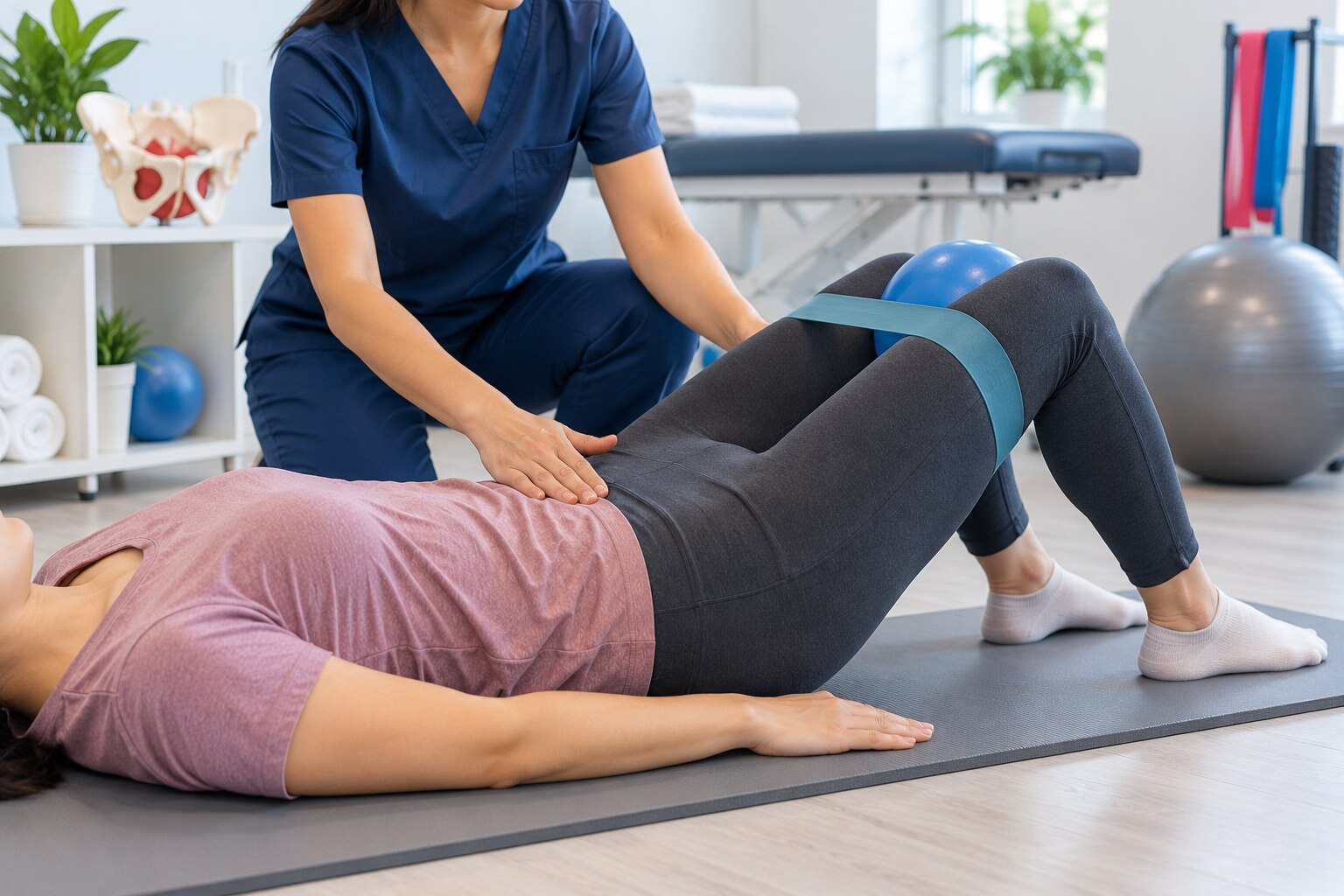
A Kegel exercise assessment shows whether you can contract and release correctly. The clinician watches for breath-holding or substitution by the abdominals, buttocks or thighs, then checks breathing, posture, movement, hip strength and trunk control.
For urinary symptoms, a bladder diary covering at least three days records drinks, urgency, frequency, leakage and activity. This helps separate muscle-control problems from fluid habits or bladder patterns.
An internal pelvic floor examination may assess muscle strength, tenderness, resting tension, relaxation and coordination through a vaginal or rectal examination. It is not automatic: the clinician must explain it, obtain consent and adapt or omit it if you decline or it is unsuitable. External assessment still provides useful information.
Why strengthening is not always the right first step
Strengthening is not the right first step when your pelvic floor cannot release fully. Leakage with coughing, running or lifting, pelvic heaviness, and a weak squeeze point towards reduced strength or endurance; pain, urgency, painful intercourse, constipation, or difficulty emptying suggest an overactive pelvic floor or poor coordination.
| Pattern | Clues | Treatment focus |
|---|---|---|
| Weak or low-endurance muscles | Leakage with impact, reduced support, weak contraction | Supervised strengthening, functional practice, and gradual progression |
| Overactive or tight pelvic floor muscles | Pelvic pain, tenderness, urgency, painful intercourse, or difficulty emptying | Pelvic floor relaxation, breathing, down-training, graded movement, and selected manual therapy |
| Poor coordination | You can squeeze but cannot release during urination or bowel movements, or symptoms persist despite strength | Breathing and timing practice, posture changes, and biofeedback |
1. Ask the physiotherapist to check both contraction and release. A strong squeeze does not rule out excessive resting tension, and repeated Kegels can worsen symptoms when the muscles are already tight.
2. For stress or mixed urinary incontinence, an individually assessed programme lasting at least three months is first-line care when appropriate. It may include at least eight contractions, three times daily, with technique checked rather than practised by guesswork.
3. If pain or muscle tenderness dominates, pelvic pain physiotherapy may prioritise education, pelvic floor relaxation, breathing, graded movement, and gentle manual techniques.
4. Faecal leakage needs more than strengthening when stool consistency, bowel habits, sensation, or timing contributes. Dietary and bowel-management advice, followed by biofeedback when coordination needs retraining, may fit better than extra contractions.
How treatment is progressed and when to seek help
A supervised pelvic floor muscle training programme is adjusted to your symptoms, strength, relaxation, and coordination rather than copied from a leaflet. For stress or mixed urinary incontinence, NICE recommends at least three months of supervised training; symptomatic stage 1 or 2 prolapse may require at least 16 weeks of supervised pelvic organ prolapse physiotherapy.
A programme might include:
- Practising contractions and full relaxation, with breathing, posture, and abdominal-pressure control.
- Building from short holds to longer endurance work, then adding coughing, lifting, running, or sport-specific tasks.
- Using bladder or bowel diaries, exercise logs, and biofeedback when you cannot feel the correct muscles or need coordination retraining.
- Combining faecal incontinence pelvic floor exercises with advice on stool consistency, toileting habits, and dietary triggers.
Progress means fewer leaks, less urgency or pelvic heaviness, easier bowel emptying, reduced pain, and better control during impact—not simply a stronger squeeze. Your clinician may retest contraction quality, endurance, relaxation, and functional tasks every few weeks. At PhysioFirstt, ask whether pelvic floor rehabilitation Jaipur includes these measures and a follow-up plan.
Seek medical or specialist assessment for new urinary retention, blood in urine or stool, recurrent unexplained urinary infections, saddle numbness, progressive leg weakness, sharp exercise pain, or worsening bulging. Persistent faecal leakage, significant prolapse, severe pelvic pain, or symptoms after prostate or pelvic surgery may require a GP, urogynaecologist, colorectal specialist, or urologist alongside physiotherapy.
Related service
Physiotherapy Physiotherapy Restore your strength, mobility, and quality of life with professional physiotherapy services tailored to your needs. |
Frequently asked questions
What can pelvic floor weakness or dysfunction feel like?
Symptoms can include bladder or bowel leakage, pelvic pressure, difficulty emptying, pain, poor muscle control, or muscles that fatigue quickly.
Who may benefit from a pelvic floor assessment?
An assessment can help people with pelvic symptoms, persistent pelvic pain, leakage, difficulty emptying the bladder or bowel, or reduced support during activity.
What happens during a pelvic floor physiotherapy assessment?
The physiotherapist reviews your symptoms, health history, breathing, posture, movement, and muscle control, then explains suitable treatment options.
Why is strengthening not always the right first step?
Strengthening can aggravate symptoms when muscles are overactive, painful, unable to relax, or poorly coordinated with breathing and movement.
How is pelvic floor treatment progressed?
Treatment progresses from the skills you need first, such as relaxation or coordination, to controlled strengthening and functional tasks when appropriate.