Pregnancy and birth can change how you walk, balance, breathe, lift, sleep and manage pressure through your trunk and pelvic floor. By understanding those changes, recognising warning signs and progressing activity according to symptoms and function, you can choose safer ways to stay active and identify when an assessment is needed.
Key takeaways
- Adapt exercises as pregnancy changes your balance, breathing and load tolerance.
- Seek urgent medical advice for bleeding, chest pain, severe headache or reduced fetal movement.
- Postnatal recovery timing depends on birth type, symptoms and how your body is healing.
- Assessment checks abdominal separation, pelvic floor function, posture, strength and movement before progression.
How pregnancy changes movement from the first trimester to the third
A growing uterus, changing body mass and pregnancy hormones alter how you stand, walk, breathe and use your muscles. These effects develop gradually, so mobility and comfort in the first trimester can look very different from movement in the third.
| Trimester | Movement changes | Effects on comfort and strength |
|---|---|---|
| First | Fatigue, nausea and breast enlargement can reduce activity; posture may change subtly. | Lower exercise tolerance, early back discomfort or reduced trunk endurance. |
| Second | The abdomen grows, the centre of mass moves forward and pregnancy posture changes become clearer. | Greater spinal loading, pelvic or low-back pain, and increased effort during walking, stairs or lifting. |
| Third | Abdominal weight, reduced hip movement and altered pregnancy balance make turning, standing and walking harder. | Breathlessness with exertion, rib discomfort, leg fatigue and difficulty rolling in bed. |
Pelvic changes in pregnancy can affect the sacroiliac joints, pubic joint and surrounding muscles. Hormonal effects, altered loading and reduced pelvic-floor or hip control can contribute to pelvic-girdle pain, while stretching of the abdominal wall can reduce trunk support without meaning the muscles have stopped working.
As the uterus rises, the diaphragm has less room to move, which can change breathing mechanics and pressure through the abdomen and pelvic floor. Some people also notice wrist or hand symptoms from fluid retention and increased pressure around nerves.
These changes do not mean you must stop moving. Adjusting positions, reducing aggravating loads and pacing activity can preserve strength while protecting comfort; severe pain, major walking restriction or neurological symptoms need clinical assessment.
Which pregnancy symptoms can physiotherapy address, and what does care involve?
Prenatal physiotherapy assesses how pain, weakness and movement limits affect your actual day, not just where symptoms occur. The clinician reviews your pregnancy history, walking, stairs, bed mobility, work demands, exercise and chosen activities, then screens for symptoms requiring obstetric or medical input.
| Symptom | What assessment checks | Care may include |
|---|---|---|
| Pelvic girdle pain | Pain with walking, turning in bed, stairs or single-leg standing | Pacing, position changes, targeted strengthening and support-belt guidance |
| Low-back pain in pregnancy | Spinal movement, hip strength, lifting technique and sitting tolerance | Graded exercise, mobility work, load modification and selected hands-on treatment |
| Sciatica-like symptoms pregnancy | Leg pain, altered sensation, weakness, reflexes and walking ability | Movement advice and exercise, with referral for progressive weakness or significant neurological signs |
| Pelvic-floor weakness | Urine leakage, heaviness, bowel symptoms and pressure control | Pelvic-floor training, breathing and pressure-management practice |
| Rib or wrist symptoms | Breathing mechanics, posture, grip and repetitive tasks | Mobility work, task changes and symptom-specific exercises |
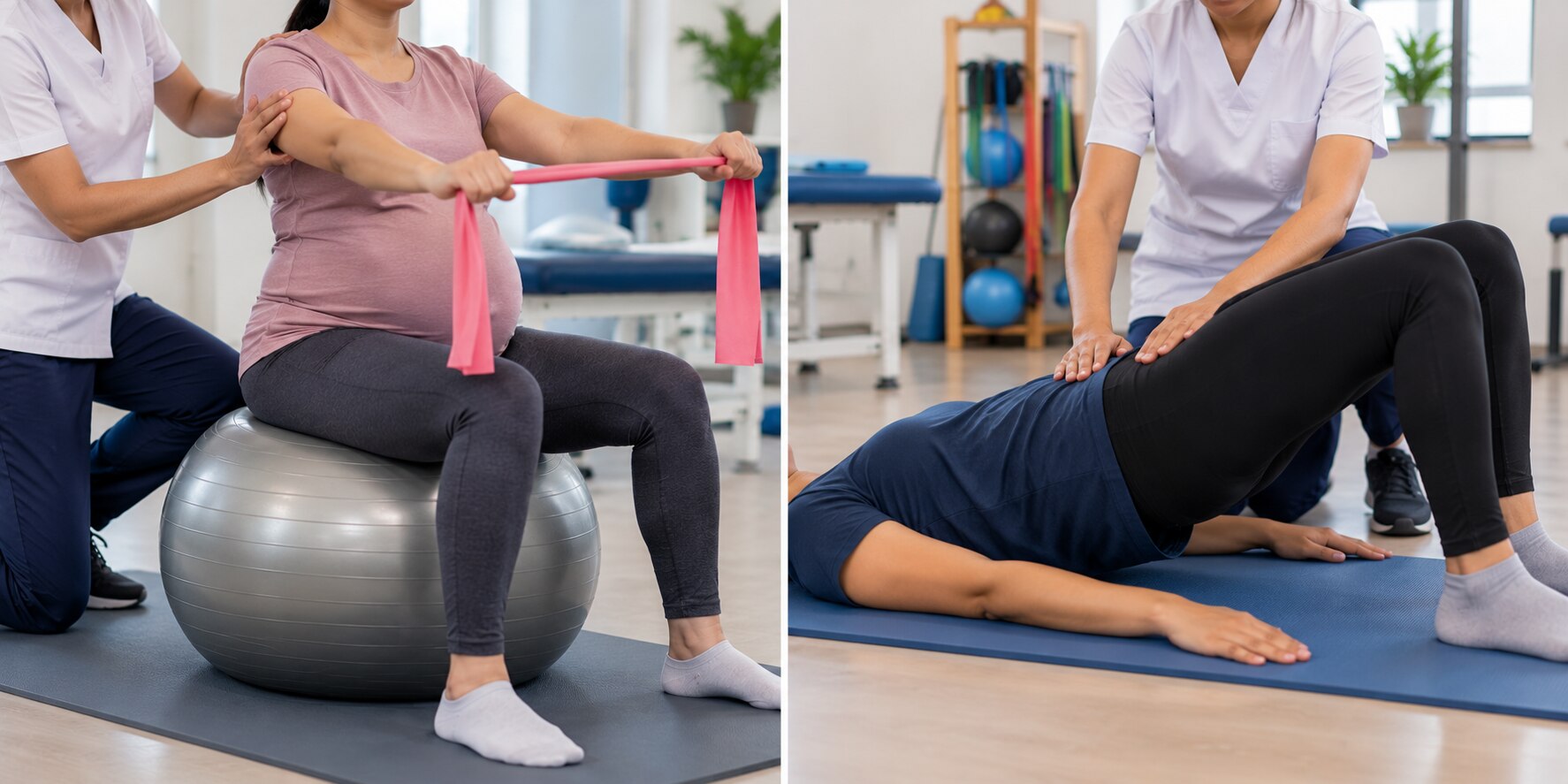
Treatment focuses on maintaining useful movement rather than prescribing bed rest. Your plan may include walking within tolerance, changing sleep or work positions, practising safer lifting, strengthening the hips and trunk, and coordinating pelvic-floor control with breathing.
Manual therapy can provide short-term relief for selected problems, but it should support—not replace—exercise and education. Severe pain, major difficulty walking, numbness, worsening weakness, or persistent pelvic, bladder or bowel symptoms needs reassessment and coordination with your midwife or obstetrician.
How to exercise safely during pregnancy and recognise urgent warning signs
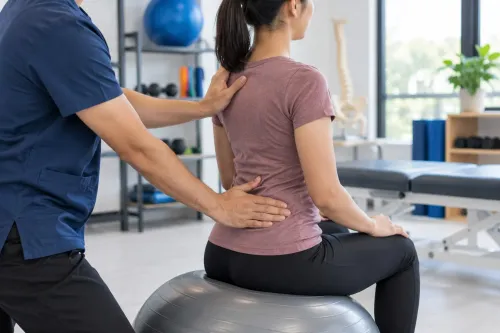
Exercise is safest when you adjust load to your symptoms, not when you force a fixed routine. Choose walking, swimming, stationary cycling, or strength work that allows steady breathing; reduce range, speed, weight, or duration if pain, pelvic pressure, leaking, or discomfort increases.
Change position regularly and break up standing, stairs, lifting, and housework with rests.
- Begin with five to ten minutes of easy movement, then build gradually. Keep lifting loads close, exhale during effort, and avoid breath-holding.
- Add pelvic-floor training with both gentle contractions and complete relaxation. Combine it with breathing and pressure management rather than repeatedly performing maximum squeezes.
- Stop the session and contact your maternity clinician for bleeding, leaking fluid, regular painful contractions, dizziness or fainting, chest pain, severe breathlessness, a severe headache or vision changes, painful calf swelling, or reduced fetal movement. These are pregnancy warning signs, not problems to train through.
Pelvic-girdle or back pain does not automatically mean bed rest. Pace painful tasks, shorten your stride, use a comfortable position for sleep and transfers, and ask for assessment if pain severely limits walking, causes numbness or weakness, or keeps worsening.
Physiotherapy can guide exercise and daily-task changes, but suspected urgent pregnancy complications need medical assessment first.
How birth type and symptoms change the timing of postnatal recovery
An uncomplicated vaginal birth does not require you to wait six weeks before seeking postnatal physiotherapy. Once you are medically stable, gentle walking, breathing work and comfortable pelvic-floor contractions can begin; an assessment is appropriate sooner if pain, weakness or movement difficulty limits you.
Timing depends on the birth and your symptoms:
- Vaginal birth: arrange an assessment when you want guidance, or promptly for urinary or bowel leakage, pelvic heaviness, back pain, painful intercourse or difficulty returning to activity.
- Assisted vaginal birth with forceps or vacuum: seek assessment early if you have pelvic-floor symptoms, significant swelling, coccyx pain or difficulty sitting, walking or controlling urine or stool.
- Caesarean birth: follow the maternity team’s advice for wound care and activity, while using gentle mobility as tolerated. Physiotherapy can support caesarean recovery before full strength returns and can address scar sensitivity, abdominal pain, lifting difficulty or persistent back pain.
- Perineal tear or episiotomy: perineal tear recovery may need individual guidance as soon as pain, wound concerns, pressure or bowel symptoms interfere with daily life. Do not push through worsening pain or discharge; contact your maternity team.
Significant blood loss, infection or a wound problem requires medical review before rehabilitation progresses. The six-week check is not proof that pelvic-floor function, scar mobility or strength has recovered. Reduce exercise and seek assessment if leaking, pelvic bulging, wound pain or symptoms after activity persist.
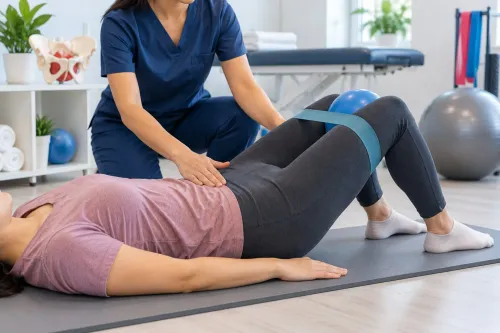
Recovery can progress from low-load control to lifting, running and sport as function improves.
What a postnatal physiotherapy assessment checks before rebuilding strength
A postnatal assessment should examine symptoms, wound healing, abdominal-wall function, pelvic-floor control, breathing, posture, gait and the movements you need at home or work. It should include a diastasis recti assessment, pelvic-floor assessment after birth, bowel and bladder symptoms, pelvic or back pain, bleeding concerns, and postpartum scar tissue after a caesarean or perineal injury.
The six-week check does not prove that strength, scar mobility or coordination have fully recovered.
- Begin with walking, comfortable position changes, breathing and gentle pelvic-floor or trunk activation when medically appropriate. Do not wait for every symptom to disappear, but reduce activity if pain, leaking, heaviness or wound symptoms increase.
- Build control before load. Progress to repeated sit-to-stands, carrying the baby, step-ups and light resistance exercises while checking breathing, abdominal pressure, pelvic symptoms and next-day recovery.
- Add lifting gradually. Practise a hip hinge, squat, floor transfer and heavier carry before returning to demanding work or gym exercises; caesarean healing, blood loss, infection or significant perineal trauma can change the pace.
- Use a graded return to exercise for running and sport. Restore strength, single-leg balance, hopping and acceleration before full-impact sessions, then increase one variable at a time: duration, speed, distance or weight.
PhysioFirstt can help compare your current function with the demands of your chosen activity, rather than clearing exercise from elapsed time alone. Persistent pain, urine or stool leakage, pelvic bulging, wound pain, or worsening symptoms warrant reassessment.
Frequently asked questions
How does pregnancy change movement from the first trimester to the third?
Pregnancy changes body mass, balance, posture, breathing and muscle use progressively. Movement in the third trimester often requires more support and load adjustment than in the first.
Which pregnancy symptoms can physiotherapy address?
Physiotherapy can address movement-related back or pelvic pain, stiffness, reduced mobility, posture problems and difficulty managing everyday activity through assessment, exercise and practical movement advice.
How can you exercise safely during pregnancy?
Use exercises suited to your stage of pregnancy, control intensity, stay hydrated and stop for warning signs. Seek urgent medical advice for symptoms such as bleeding, chest pain, severe headache or reduced fetal movement.
When can you start postnatal physiotherapy after birth?
Timing depends on whether you had a vaginal or caesarean birth, your symptoms, healing and medical advice. An assessment helps determine when to rebuild mobility, pelvic floor control and strength.
What does a postnatal physiotherapy assessment check?
It checks breathing, posture, abdominal separation, pelvic floor function, pain, mobility, strength and movement control before setting a progressive recovery plan.