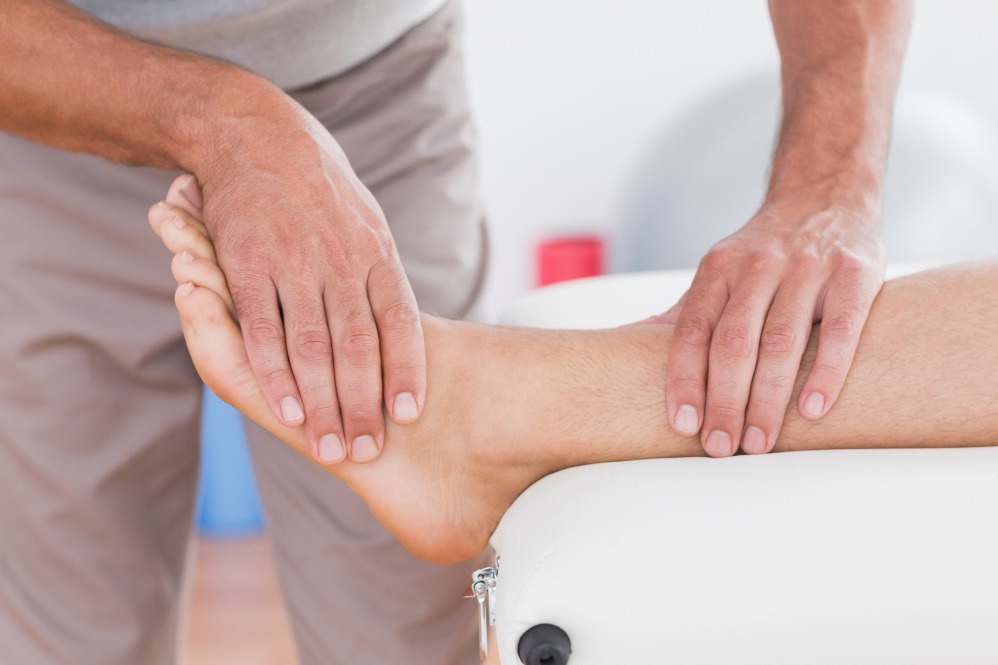
An ankle injury can quickly change the way someone walks and performs everyday activities. Swelling, pain, reduced movement, weakness, or fear of putting weight on the foot may remain even after the initial injury begins settling. For active people, the demands become greater when the goal is returning to running, jumping, gym training, or sport.
Choosing ankle injury physiotherapy in Jaipur should therefore involve more than waiting until the swelling disappears.
Start by Understanding the Injury
Ankle injuries vary considerably.
They may involve ligaments, muscles, tendons, bones, or other structures around the joint. How the injury occurred provides important information.
A sudden twisting injury while playing sport differs from pain that developed gradually during running.
Following significant trauma, an assessment may determine whether medical investigation or imaging should be considered before rehabilitation begins.
What Should Be Checked?
Depending on the injury, physiotherapy assessment may examine:
- Swelling
- Ankle movement
- Ability to bear weight
- Walking pattern
- Calf strength
- Balance
- Foot control
- Single-leg movement
- Hopping or jumping at later stages
The goal is to establish what has been lost and what needs to be restored.
Walking Without Pain Is Only One Milestone
For someone whose normal activities are relatively light, comfortable walking may represent substantial progress.
For an athlete, however, it is not enough.
Running, landing, accelerating, changing direction, and reacting to unpredictable movements place much greater demands on the ankle.
Rehabilitation should therefore progress according to the person's intended activity.
PhysioFirst in Jaipur provides orthopedic and sports physiotherapy where exercise progression can be matched to functional and sporting requirements.
What to Look for Before Returning to Sport
Return-to-sport decisions should consider more than the number of days since injury.
Depending on the condition, useful readiness indicators can include:
- Satisfactory ankle mobility
- Improved calf and lower-limb strength
- Good single-leg balance
- Ability to perform progressive hopping
- Tolerance of running
- Controlled changes of direction
- Confidence in the injured ankle
- Ability to complete sport-specific drills
The exact criteria vary according to the injury and sport.
Avoid Doing Too Much Too Soon
Once everyday walking feels normal, it can be tempting to return immediately to full exercise.
A graded transition is usually more sensible.
Walking may progress to faster walking, jogging, running, controlled drills, and then more demanding movements where appropriate. Strength and balance exercises can continue alongside this progression.
Any substantial increase in swelling, instability, or pain should be reviewed rather than repeatedly ignored.
Know When Medical Assessment Is Important
An ankle injury associated with severe pain, obvious deformity, inability to bear weight, significant tenderness after trauma, or substantial swelling may need medical evaluation.
Persistent instability or repeated ankle injuries also deserve assessment.
For patients and athletes across Jaipur, Rajasthan, good ankle rehabilitation should be built around the activities they want to regain. Recovery is not simply about making an injured ankle feel better while resting. It is about progressively rebuilding mobility, strength, balance, load tolerance, and confidence so the ankle is better prepared for walking, work, exercise, or sport.
Keywords