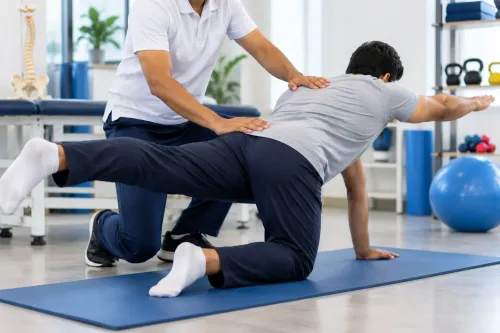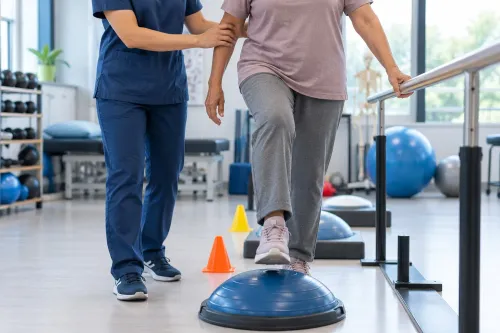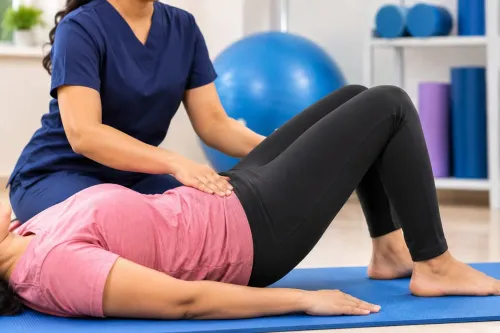
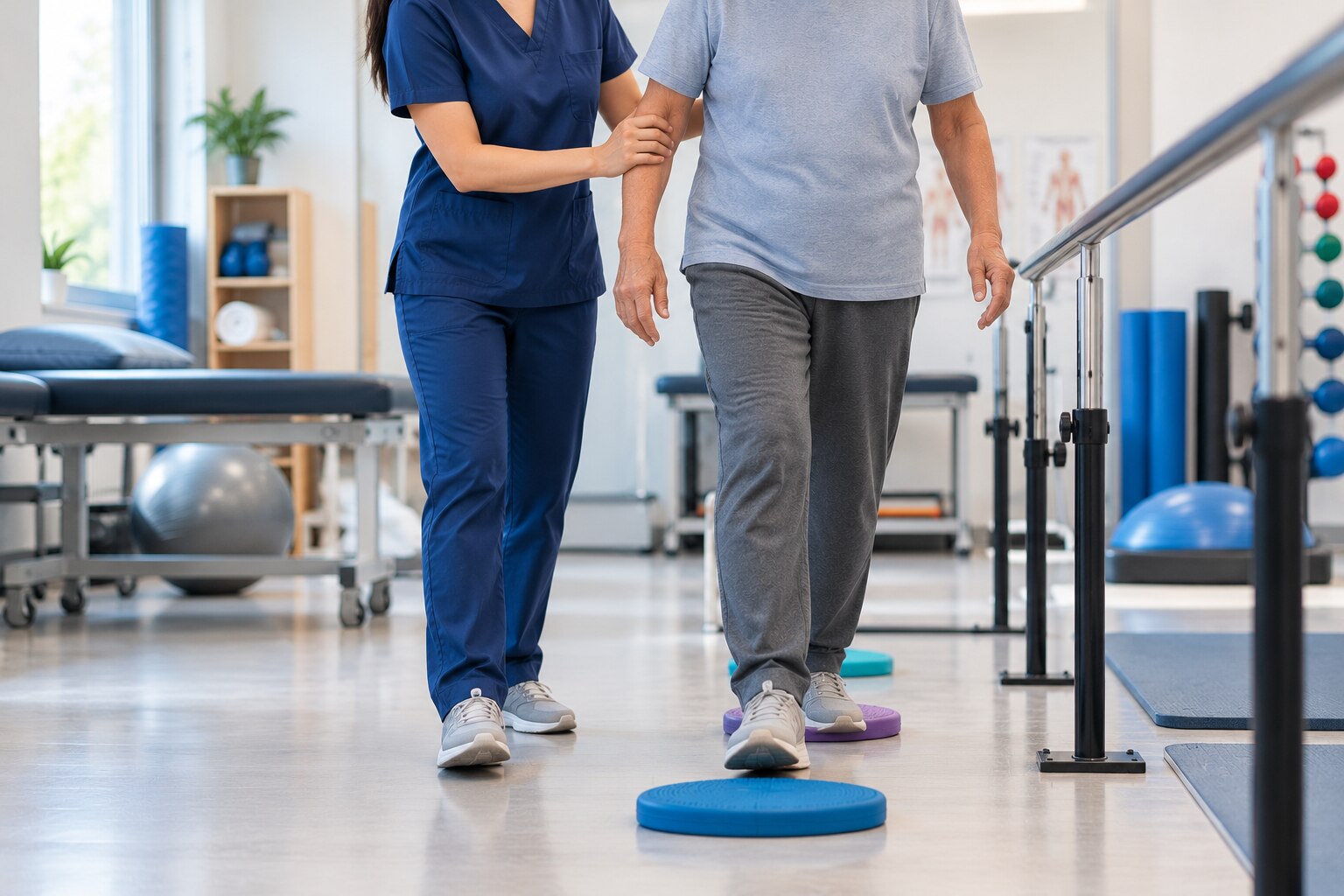
Shuffling, freezing, short steps and unsafe turns can make ordinary activities feel unpredictable, even when leg strength appears adequate. You will learn how Parkinson’s-specific physiotherapy identifies the barriers behind these problems, practises safer movement strategies and adapts support to medication timing, fatigue, falls risk and changing daily needs.
Key takeaways
- Use larger, deliberate steps instead of shuffling.
- Pause, reset posture and use visual cues during freezing.
- Practise turns and everyday tasks, not just isolated exercises.
- Adapt walking practice as symptoms, medication effects and needs change.
Why Parkinson’s changes walking and what a physiotherapy assessment checks
Parkinson’s disease gait is not simply a weakness problem. Bradykinesia reduces the size and speed of movement, while impaired automatic movement makes each step require conscious effort. Rigidity, reduced arm swing, poor postural reactions and reduced stride length can produce shuffling steps, festination and unsafe turns.
Freezing of gait (FOG) episodes often appear at doorways, during turning, when starting, or when attention is divided.
A physiotherapist checks how these problems affect real movement, not just how strong your legs are:
- Walking speed, step length, rhythm, arm swing and foot clearance
- Turning, stopping, starting, approaching a chair and rising from it
- Balance reactions, posture, range of movement and lower-limb strength
- Freezing triggers, frequency, duration and recovery strategies
- Falls history, near-falls and confidence while walking
- Walking while talking, carrying an object or responding to another task
- Differences between medication “on” and “off” periods, including fatigue or dizziness
Someone may walk adequately across a quiet clinic but freeze in a crowded shop or while passing through a narrow doorway. The assessment therefore tests distractions, obstacles and changes of direction when safe. It also identifies whether a cane or walker improves stability or creates a new coordination problem.
Treatment aims to preserve activity, reduce hazards and teach useful movement strategies; physiotherapy cannot reverse Parkinson’s disease or guarantee that progression will stop.
Movement strategies that improve steps, turns and balance
A clear cue can replace movement that no longer starts automatically. Physiotherapy combines amplitude-based movement practice, external visual cueing, auditory cueing and deliberate weight shifting to improve initiation, step length and control.
| Strategy | What it targets | How it is practised |
|---|---|---|
| Amplitude-based movement practice | Small, shuffling steps and reduced arm swing | Reach farther, lift the feet, swing the arms and take consciously larger steps |
| External visual cueing | Freezing or short steps | Step over floor lines, aim for a marked target or follow a wide pathway |
| Auditory cueing | Slow initiation or irregular rhythm | Walk to a metronome beat, counting aloud or using steady music |
| Deliberate weight shifting | Starting, turning and balance recovery | Move the body weight fully onto one leg before lifting the other foot |
| Turning drills | Freezing during pivots or tight turns | Use several wide steps, slow down before the turn and avoid pivoting on one foot |
Practise turning in both directions, around chairs and through doorways; straight-line walking can look capable while a narrow or rushed turn triggers freezing. For balance challenges, a physiotherapist may train reaching, stepping in different directions, obstacle negotiation and controlled responses to a gentle loss of balance.
The useful cue depends on timing, surroundings and the person, so test one instruction at a time rather than shouting several. A cane or walker must also be selected and practised clinically: an aid that improves stability can worsen freezing if it creates a new coordination problem.
Practising the tasks that protect independence at home
Practising the exact movements you need at home transfers improvement into daily life. Repeated sit-to-stand practice teaches you to place your feet, lean forward, push through the armrests and pause before walking, reducing rushed rises and loss of balance.
- Bed mobility: practise rolling, moving to the edge, and sitting up in a fixed sequence. This reduces twisting and prevents standing before your feet are positioned securely.
- Stairs: rehearse foot placement, handrail use and deliberate weight shifts on the actual staircase or a close simulation. A therapist can identify when fatigue or freezing makes a rest necessary.
- Doorways: practise stopping, resetting posture and stepping through without rushing. Markers on the floor can provide a visual target when a narrow entrance triggers freezing.
- Dressing: practise sitting for trousers, socks and footwear, then standing only for the parts that require it. This limits falls caused by balancing on one leg.
- Bathing: rehearse transfers over the bath edge or into the shower, including reaching for controls and using grab rails. Practise the sequence with dry equipment before adding water.
- Carrying objects: walk while holding a light, stable item only after balance is reliable. Use a bag, trolley or second person when carrying prevents you from using a handrail.
- Turning drills and obstacle practice: repeat changes of direction, furniture clearance and safe stopping rather than relying on automatic steps.
Progress is clearer when goals are measurable: fewer near-falls, quicker chair rises, safer turns or more independent bed mobility. Reassess these tasks as symptoms, medication timing and the home environment change.
What to do during freezing and how carers can support walking practice
Stop walking when freezing starts; do not push through it. Keep both feet still, stand tall if safe, breathe, and shift weight gently from one side to the other. Then use one clear cue, such as a metronome or counting aloud, and take one deliberate step. Avoid several instructions at once.
- Ask the person to identify freezing triggers, such as doorways, tight spaces, turning, starting after standing, or rushing.
- Give space and allow extra time. Do not pull an arm, push from behind, or steer the person through the blockage.
- For walking through doorways, pause before the threshold, aim at a visible floor target beyond it, and step over the target after the cue.
- During turns, stop, reset posture, and turn with several large steps rather than pivoting quickly.
- Remove loose rugs, clutter, trailing wires, and poorly placed furniture. Keep routes between the bed, bathroom, and chair clear as part of falls prevention.
- Practise one task at a time in a quiet area before adding conversation, carrying, or other distractions.
A carer should walk beside or slightly behind the person without crowding them and use the same agreed cue each time. A cane, frame, or wheeled walker must be selected and practised with a physiotherapist familiar with Parkinson’s gait; the wrong aid can worsen freezing or create a coordination problem.
Report falls and freezing patterns, including whether they occur before the next levodopa dose or during its benefit, to the clinical team.
How Parkinson’s physiotherapy changes as needs and symptoms change
Treatment goals should shift as function changes. Early on, focus on stride length, turning speed, aerobic capacity and confidence; later, prioritise safe transfers, essential walking, energy conservation and participation in daily routines. Fatigue, cognition and reduced judgement call for shorter sessions, simple instructions, rest breaks and supervision.
Exercise timing matters because walking can vary across on and off periods. Record whether freezing, falls or stiffness occur before levodopa timing, during peak benefit or without a clear pattern, then share this record with the prescribing clinician. Physiotherapy can work around fluctuations but cannot replace medication review.
Safety needs to match the current risk:
- Use treadmill gait training only after checking transfers, freezing, dizziness and balance; adjust speed, cueing, body-weight support, harness use and supervision to the person’s control.
- During dyskinesia, reduce speed and task complexity, protect against sudden loss of balance, and stop when movement becomes unsafe.
- For orthostatic dizziness, pause after sitting or standing, check symptoms and seek medical review for recurrent episodes.
- Choose walking aids for Parkinson’s disease through hands-on assessment; a poorly matched frame or stick can increase freezing, tripping or dependence.
Frequent falls, severe freezing or cognitive change warrant closer professional support and home-risk review. Speech and language therapy, occupational therapy, nursing and medical input may be needed alongside physiotherapy. At PhysioFirstt, assessment can help determine whether the programme needs more supervision, different equipment or referral for interacting problems such as pain and autonomic symptoms.
Related service
Physiotherapy Physiotherapy Restore your strength, mobility, and quality of life with professional physiotherapy services tailored to your needs. |
Frequently asked questions
Why does Parkinson’s disease affect walking and balance?
Bradykinesia, rigidity, reduced arm swing, shorter steps and impaired automatic movement can cause shuffling, festination, unsafe turns and poor balance reactions.
What does a Parkinson’s physiotherapy assessment check?
A physiotherapist checks walking speed, step length, turning, balance reactions, posture, freezing, transfers and how symptoms affect daily activities.
What strategies can help with steps, turns and freezing?
Larger deliberate steps, external cues, a posture reset, pausing before turns and breaking movements into clear stages can support safer walking.
How can carers support walking practice at home?
Carers can provide simple cues, remove trip hazards, allow extra time, avoid pulling the person forward and follow the physiotherapist’s practice plan.