Sports injuries can occur suddenly during a tackle, landing, sprint, throw, or change of direction. Others develop gradually when training volume increases faster than the body can tolerate. In both situations, getting the pain to settle is only one stage of recovery.
Athletes and recreational players in Jaipur need rehabilitation that prepares the injured area for the actual demands of their sport.
Why Pain Relief Is Not the Finish Line
A player may feel comfortable while walking but still be unable to sprint, jump, cut, tackle, or throw safely.
This gap matters.
Sport places greater forces on the body than normal daily activities. Rehabilitation therefore needs to progress from basic movement toward strength, speed, power, balance, and sport-specific skills where appropriate.
Returning solely because pain has reduced can leave important physical deficits unaddressed.
Start With an Accurate Injury Assessment
A sports physiotherapy evaluation considers how the injury occurred and what happened immediately afterward.
Useful information includes whether there was swelling, a popping sensation, inability to continue playing, instability, loss of movement, or difficulty bearing weight.
Assessment may then examine:
- Joint mobility
- Strength
- Swelling
- Balance
- Movement control
- Running mechanics
- Jumping or landing
- Sport-specific tasks
More serious injuries may require medical imaging or specialist evaluation before rehabilitation progresses.
Rehabilitation Should Become Progressively Specific
Early rehabilitation might focus on restoring comfortable movement and basic strength.
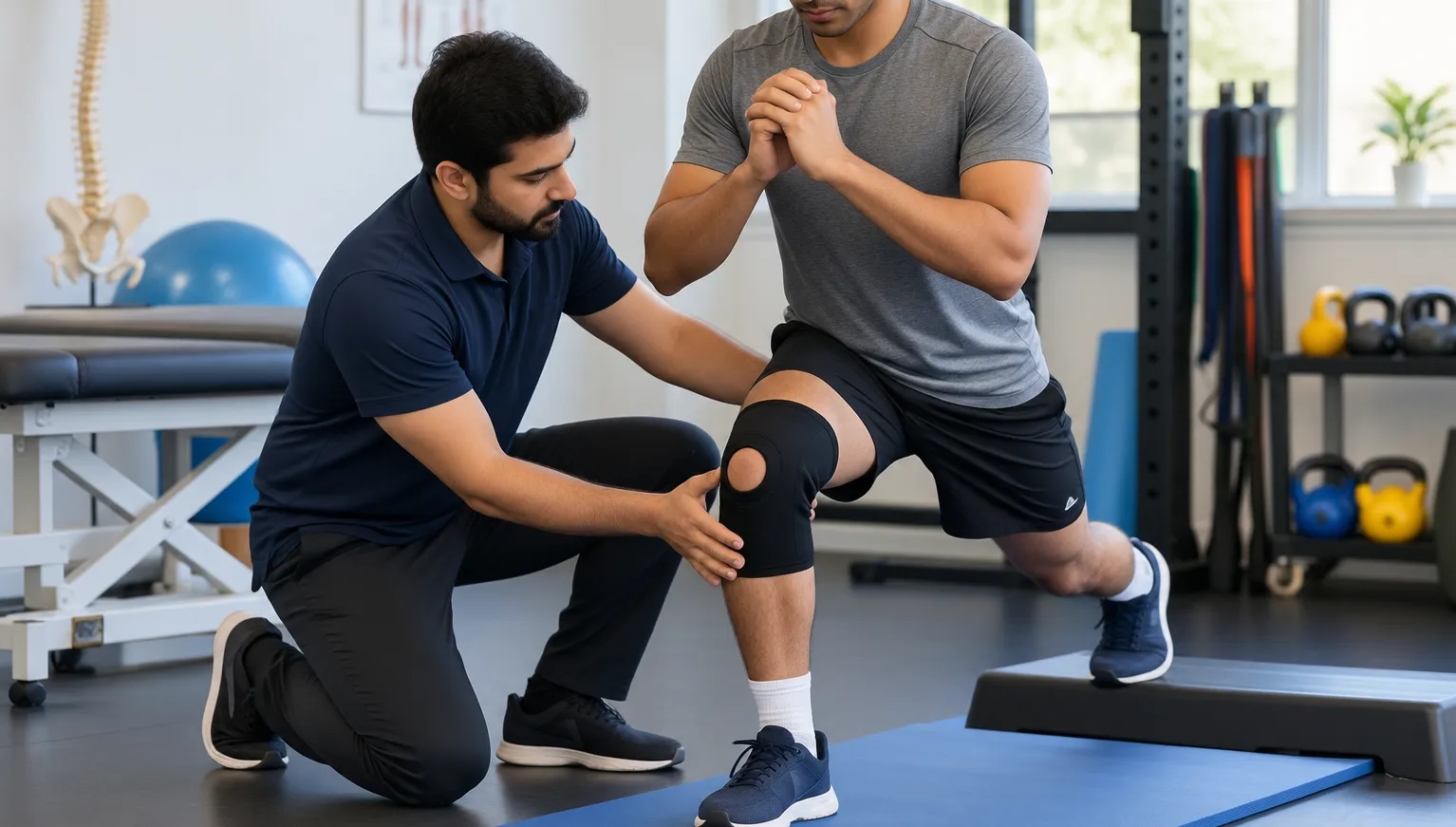
As recovery advances, exercises should increasingly resemble the demands of the sport.
A football player may eventually require acceleration, deceleration, running, kicking, and direction-change drills. A badminton player may need repeated lunging, jumping, overhead movement, and rapid court changes.
PhysioFirstt in Jaipur provides sports rehabilitation with the objective of progressing patients according to functional needs rather than relying solely on symptom reduction.
Avoid Sudden Return to Full Training
One common mistake is moving directly from rehabilitation exercises into a complete training session.
A graded return can be more appropriate.
An athlete might progress through individual drills, controlled practice, modified team training, full training, and finally competitive participation depending on the injury.
Training load should also be monitored during this transition.
Readiness Indicators Matter
There is no single test that applies to every sports injury, but useful indicators may include adequate movement, strength, balance, confidence, sport-specific performance, and the ability to tolerate progressive training without an unacceptable symptom response.
Comparison with the uninjured side may sometimes provide additional information, although individual circumstances need to be considered.
Athletes should also feel psychologically confident in the injured area. Hesitation during landing or direction changes can affect performance even when basic strength has improved.
For athletes, gym-goers, runners, and recreational sports participants across Jaipur, Rajasthan, sports injury rehabilitation should answer a practical question: is the body prepared for the activity it is returning to?
Pain relief alone cannot provide that answer. Assessment, progressive loading, sport-specific conditioning, and appropriate return-to-play criteria create a more complete rehabilitation pathway and help athletes return with greater physical preparedness.
Keywords