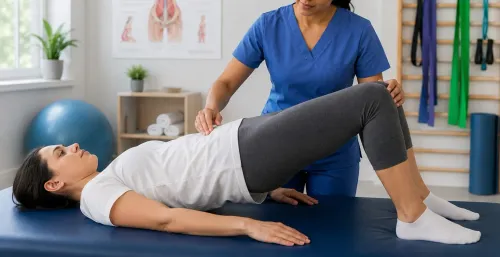

Unsteadiness is not one condition: veering while walking, dizziness, faintness, weakness, sensory loss, and joint pain point to different assessment pathways. You will learn how clinicians identify the source of instability, what balance rehabilitation involves, how to practise safely, and which home changes reduce risk alongside exercise.
Key takeaways
- Seek urgent care after sudden balance loss, weakness, speech trouble, or severe headache.
- Ask for vestibular, sensory, vision, medication, and strength factors during your assessment.
- Progress balance exercises from supported standing to walking, turning, and real-life tasks.
- Remove trip hazards, improve lighting, and use handrails where you need support.
What Kind of Balance Problem Do You Have, and When Is It Urgent?
A balance disorder means your body cannot reliably keep you upright or control movement. Signs include unsteadiness while standing, veering when walking, difficulty turning, or repeated near-falls. The cause may be vestibular, sensory, visual, neurological, medication-related, or simple deconditioning rather than a problem in the joints alone.
| Symptom | What it feels like | What it may indicate |
|---|---|---|
| Balance impairment | Swaying or losing stability without spinning | Reduced balance control, sensation, strength, or coordination |
| Vertigo | Spinning or the room moving | Inner-ear or vestibular disorder, including possible BPPV |
| Light-headedness | Feeling faint, weak, or “about to black out” | Blood-pressure, heart, medication, or other medical issue |
| Fainting | Brief loss of consciousness | Requires medical assessment, not balance exercises alone |
| Leg weakness | The leg cannot support or move normally | Neurological or muscle problem |
| Joint pain | Pain limits weight-bearing or movement | Musculoskeletal problem affecting walking |
The distinction in vertigo versus light-headedness changes the assessment pathway. Physiotherapy is appropriate for persistent or recurring instability, falls, movement-related dizziness, weakness from deconditioning, or difficulty with walking and transfers after medical causes have been considered. A clinician should also review reduced sensation, poor vision, medicines, neurological conditions, footwear, and blood pressure when standing.
Seek urgent medical care for sudden loss of balance or dizziness with:
- Facial drooping, speech difficulty, or one-sided weakness
- A severe new headache
- Chest pain or fainting
- A new inability to walk
Recurrent falls also warrant medical assessment before you begin an exercise programme.
How Does a Physiotherapist Assess Your Fall Risk?
A normal-looking straight-line walk does not rule out fall risk. You may walk steadily on a clear clinic floor yet lose balance when turning, rising from a chair, climbing stairs, reacting to a trip, or walking while distracted. The physiotherapist will ask about previous falls, near-falls, dizziness, medication, and situations that make you unsteady.
A fall-risk assessment may include:
- Watching your gait, turns, stopping, and changes of speed
- Observing a sit-to-stand test and chair transfers
- Checking stair use and single-leg stance
- Testing reactive stepping after a safe, controlled balance disturbance
- Assessing dual-task walking, such as walking while counting or carrying an object
- Measuring lower-limb strength and reaction speed
- Screening vision, sensation in the feet, footwear, and vestibular symptoms
- Checking blood pressure after standing when light-headedness or faintness is a concern
The Timed Up and Go test is a useful quick screen: you stand from a chair, walk 3 metres, turn, return, and sit down. A time of 12 seconds or more is commonly used to flag the need for further assessment, but it is not a stand-alone diagnosis.
Chair height, instructions, footwear, walking aids, pain, and familiarity with the task can change the result, so the physiotherapist interprets it alongside the rest of the examination.
What Happens During Balance Rehabilitation?
A therapist matches each exercise to the task that fails. If standing becomes unstable when your feet move closer together, treatment starts with static balance exercises using a narrowed base of support, then controlled weight shifting. Dynamic balance exercises add reaching, stepping, turning, and changes in direction.
A typical programme may include:
- Gait training to practise speed changes, turning, starts, stops, and safer walking over uneven surfaces or outdoors.
- Stepping-reaction drills, so you practise recovering when your balance is disturbed rather than freezing or falling.
- Lower-limb strengthening through sit-to-stands, step-ups, heel raises, and controlled squats.
- Dual-task exercises, such as walking while counting, carrying an object, or responding to a question.
These tasks are graded around your symptoms, strength, confidence, and ability to practise safely. Avoiding every challenging surface can reduce activity and leave you weaker, so rehabilitation uses measured exposure to meaningful situations.
Persistent dizziness from vestibular hypofunction needs vestibular rehabilitation, not generic balance drills alone. It commonly combines gaze-stability exercises, habituation for suitable movements, and balance or gait exercises based on vestibular findings.
Confirmed benign paroxysmal positional vertigo follows a different pathway. Positional testing identifies the affected canal, then a BPPV repositioning manoeuvre moves displaced crystals; routine balance exercises or vestibular-suppressant medication do not replace this treatment. Reassessment follows if positional symptoms persist.
How Should Exercises Progress, and How Will You Know They Work?
Aim for at least 3 hours of balance-focused exercise each week when your clinician considers that dosage safe. Programmes with this amount of practice and substantially challenging balance have produced larger fall-rate reductions than easy or mainly seated routines.
Repeat practice, challenge, and functional lower-limb strengthening matter. Once an exercise feels easy, repeating it unchanged provides less training stimulus; increase one difficulty at a time while keeping your movements controlled.
Start beside a stable support if you need it, with a clear floor and a chair nearby. Stay away from stairs, traffic, wet floors, and unstable equipment. Progress through:
- A narrower stance, such as feet closer together or heel-to-toe standing
- Less hand support, moving from two hands to one finger or no contact
- Weight shifting, stepping, turning, and changing walking speed or direction
- Carrying a light object while walking
- Dual-task balance training, such as walking while naming items or responding to questions
- Graded exposure to meaningful challenges, including uneven ground, obstacles, outdoor walking, or turning in busy spaces
Stop and seek advice if you develop new severe dizziness, faintness, chest pain, or repeated loss of balance. A therapist can adjust dosage for your diagnosis, symptoms, strength, vision, sensation, and home safety.
Measuring rehabilitation progress involves tracking whether you:
- Have fewer falls and near-falls
- Turn and change direction more safely
- Stand for longer without grabbing support
- Rise from chairs and transfer with better control
- Walk with greater confidence
- Perform prescribed balance or strengthening tasks more accurately
The goal is safer, more capable movement—not necessarily a perfect balance score or complete removal of dizziness.
Which Home and Clinical Changes Reduce Fall Risk?
Secure footwear, brighter lighting, and a clear route through your home reduce everyday hazards. Home fall prevention should also include removing loose rugs, installing grab rails beside the toilet and in the shower, arranging a vision check, requesting a medication review, and completing a home hazard assessment.
- Ask a clinician to check whether dizziness, sedatives, blood-pressure medicines, or several medicines together affect your stability.
- Keep frequently used items within easy reach, especially on stairs and in the bathroom.
- Practise standing up, turning, and walking in the places where you usually feel unsteady.
Walking aids help only when the aid matches the task and your ability. A poorly adjusted stick can encourage leaning; an unsuitable frame can catch on thresholds or replace protective stepping.
| Aid | Best use | What requires practice |
|---|---|---|
| Walking stick | Extra support on one side during walking | Correct height, opposite-hand use, stairs, turns, and uneven ground |
| Walking frame | Greater support when weakness or instability affects both sides | Frame placement, thresholds, chair transfers, and safe turning |
| No aid | Short, familiar tasks when balance is reliable | Reassess if fatigue, darkness, crowds, or dual-tasking changes stability |
Fear of falling can shrink activity, reduce strength, and worsen reactions. Rebuild meaningful tasks through graded practice, such as outdoor walking, obstacle negotiation, or carrying an object, rather than avoiding every challenge. PhysioFirstt can connect home findings, aid fitting, and exercise selection into an assessment-led plan when instability persists or the correct pathway remains unclear.
Frequently asked questions
When is a balance problem urgent?
Seek urgent medical help for sudden balance loss with weakness, facial drooping, speech difficulty, double vision, fainting, severe headache, or chest pain.
How does a physiotherapist assess fall risk?
Assessment can include your symptom history, medication review, vision and sensation checks, leg strength, walking, turning, transfers, and standard balance tests.
What happens during balance rehabilitation?
Treatment targets the cause and may include gaze or vestibular work, strength training, weight shifting, stepping, gait practice, and task-specific balance exercises.
How can you reduce fall risk at home?
Improve lighting, remove loose rugs and clutter, add secure handrails, keep frequently used items within reach, and wear supportive footwear.