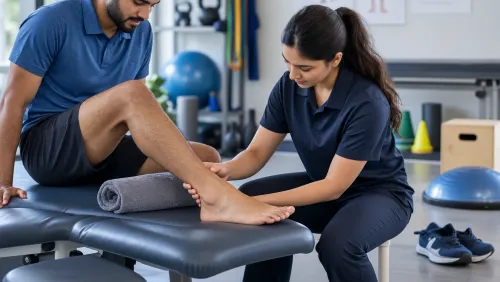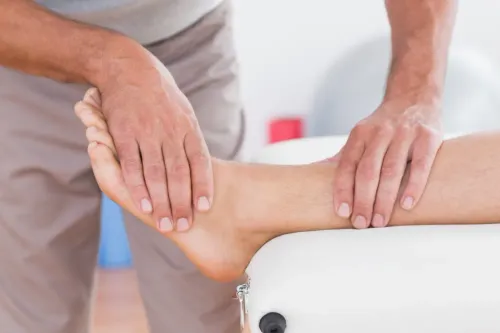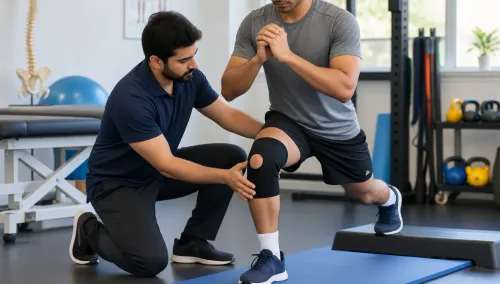
A diagnosis of knee arthritis can make people cautious about walking, climbing stairs, or exercising. Some begin avoiding movement because they fear that activity will further “wear out” the knee. While osteoarthritis can produce pain, stiffness, swelling, and reduced function, appropriate physical activity is commonly an important part of conservative management.
For adults in Jaipur managing knee arthritis, physiotherapy can help make movement more structured and appropriate to current ability.
Why Knee Arthritis Feels Different Between Patients
X-ray findings do not always explain exactly how a person feels or functions.
One person may experience substantial morning stiffness but remain active. Another may struggle with stairs or longer walks. Body strength, general activity, previous injuries, joint mobility, and other health factors can influence function.
Assessment therefore focuses on the individual rather than treating an X-ray alone.
What Physiotherapy Can Target
Knee arthritis physiotherapy may focus on several areas.
These can include:
- Knee mobility
- Quadriceps strength
- Hip strength
- Balance
- Walking capacity
- Functional movement
- General physical conditioning
The programme should begin at a level the patient can manage and become progressively more challenging as capacity improves.
Pain During Exercise Does Not Always Mean Harm
People with arthritis often become concerned whenever an exercise causes discomfort.
Exercise response needs to be interpreted in context. Mild or temporary symptoms may sometimes occur when activity is increased, while substantial or persistent worsening may indicate that the programme needs adjustment.
A physiotherapist can help modify resistance, repetitions, movement range, or activity volume rather than automatically stopping exercise.
Physiotherapy Compared With Avoiding Activity
Reducing every activity that produces even minor discomfort can gradually reduce strength and confidence. This may make stairs, walking, and getting up from a chair even harder.
A graded programme takes a different approach.
The patient begins with manageable exercises and activities, monitors symptoms, and gradually progresses. Walking distance, strength exercises, balance work, or functional tasks can be increased according to tolerance.
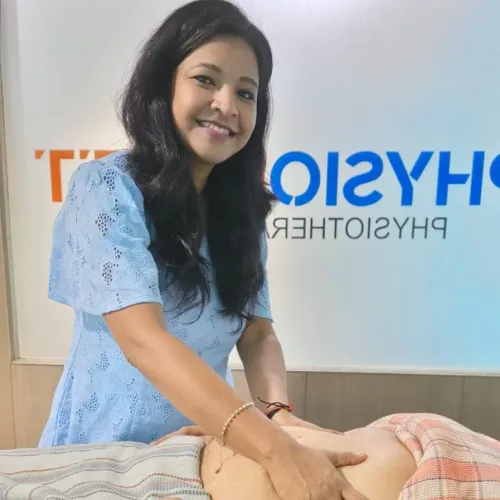
PhysioFirstt in Jaipur provides physiotherapy assessment for people with knee and other musculoskeletal problems, with rehabilitation tailored to mobility limitations and individual goals.
Everyday Strategies Can Also Help
Patients can make practical adjustments while rehabilitation progresses.
Using a handrail temporarily on stairs, dividing long walks into manageable distances, avoiding sudden increases in activity, and wearing suitable footwear may make daily movement easier.
The objective is not to eliminate every demanding activity permanently. It is to manage current symptoms while improving the capacity to perform more over time.
When Further Medical Review Is Needed
Physiotherapy forms one part of knee arthritis management. Patients with severe or rapidly changing symptoms, significant swelling, inability to bear weight, recent trauma, or other concerning features may require medical evaluation.
People considering injections, medication changes, or surgery should discuss these options with appropriately qualified medical professionals.
For many patients in Jaipur and elsewhere in Rajasthan, an arthritis diagnosis does not mean movement must stop. Appropriate exercise can be scaled to age, symptoms, strength, and current function.
A well-planned knee arthritis programme should help patients understand what they can safely do, build physical capacity gradually, and measure progress through meaningful activities such as walking, stairs, household tasks, work, and recreation.
Keywords