Pain with bending, turning, walking, lifting, or sitting can come from irritated tissues, protective muscle tension, weakness, joint stiffness, or several factors together. By the end, you will know when osteopathy is a reasonable option, what an assessment and treatment plan should include, which risks and warning signs matter, and how to judge progress.
Key takeaways
- Use osteopathy for position- or movement-related pain after serious causes are excluded.
- Expect questions, movement tests, hands-on assessment, and a personalised treatment plan.
- Choose techniques based on your symptoms, examination findings, comfort, and treatment goals.
- Pair hands-on treatment with strengthening, mobility work, and activity changes for lasting results.
When osteopathy fits restricted movement—and when it does not
Osteopathy suits mechanical back pain, neck stiffness, joint restriction, muscle tension and movement-related pain when symptoms change with position, activity or hands-on examination.
Treatment is most useful when the goal is improving function, not “putting a vertebra back into place.” Limited movement alone does not prove misalignment, scarred fascia or one mechanical cause; pain, protective muscle activity, fear and joint irritation can all reduce range.
| Presentation | Osteopathy may fit | Medical assessment first |
|---|---|---|
| Local back or neck pain | Symptoms are stable, movement-related and without neurological changes | Pain follows significant trauma, or steadily worsens |
| Stiffness or joint restriction | Function is limited but strength and sensation remain normal | New weakness, numbness, loss of coordination or pain down an arm or leg |
| Muscle tension or movement-related pain | Symptoms improve with gentle activity and have no systemic features | Fever, unexplained weight loss, cancer history, or severe night pain |
| Any spinal pain | Use manual treatment alongside exercise and activity advice | New bladder or bowel difficulty, saddle numbness, or inability to walk normally |
Seek urgent care for sudden severe neck pain or headache, particularly with dizziness, double vision, speech difficulty or weakness. Cervical high-velocity manipulation deserves a separate discussion because cervical artery dissection can cause neck pain or headache before stroke; ask about this risk before consenting.
For uncomplicated low-back pain, routine imaging rarely helps unless the result would change management. Evidence supports modest, short-term benefits from osteopathic manipulation, not superiority over active conservative care.
What a proper osteopathy assessment and first appointment involve
Before hands-on treatment, the osteopath should establish what is happening, what needs medical review, and what you want to regain. A restricted movement does not prove a displaced vertebra or “misalignment”; pain, muscle guarding, fear of movement and joint irritation can all limit range.
1. You give a symptom history: when symptoms began, what worsens or eases them, previous injuries, medical conditions, medication, and changes in strength, sensation or coordination.
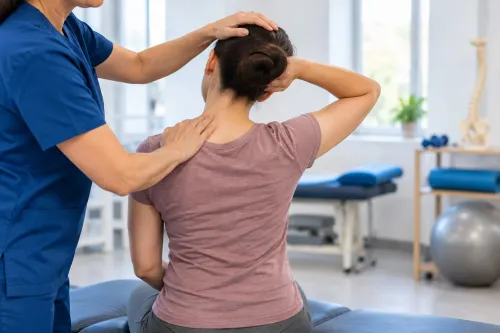
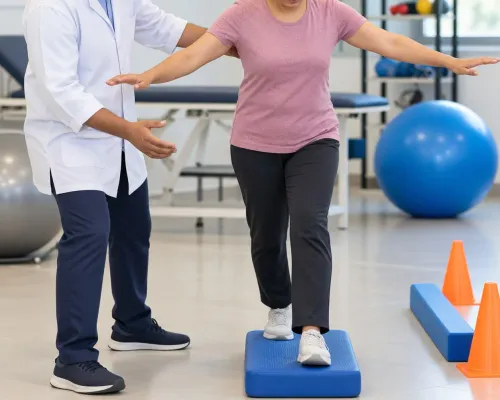
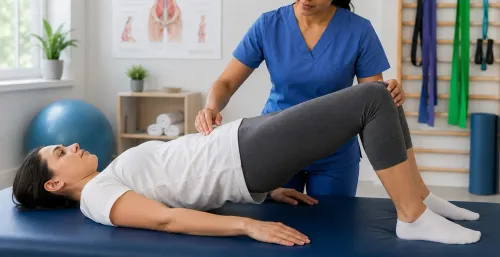
2. The practitioner performs movement tests, posture and gait observation, and a joint and muscle examination. Findings should be linked to your pain and daily function, not treated as proof of one structural cause.
3. The osteopath screens for referral signs, including major trauma, fever, unexplained weight loss, cancer history, immunosuppression, intravenous drug use, progressive neurological loss, or new bladder, bowel or sexual dysfunction with saddle numbness. These require medical assessment rather than routine manual treatment.
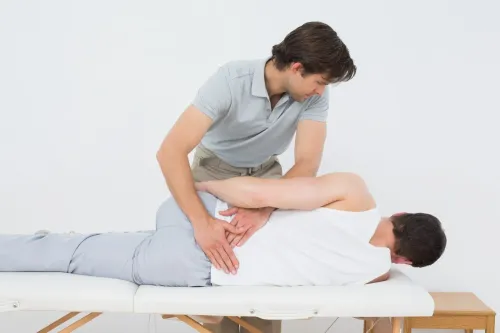
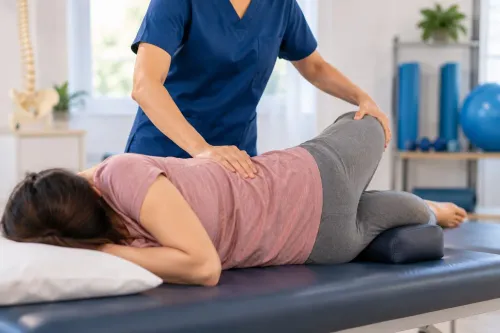
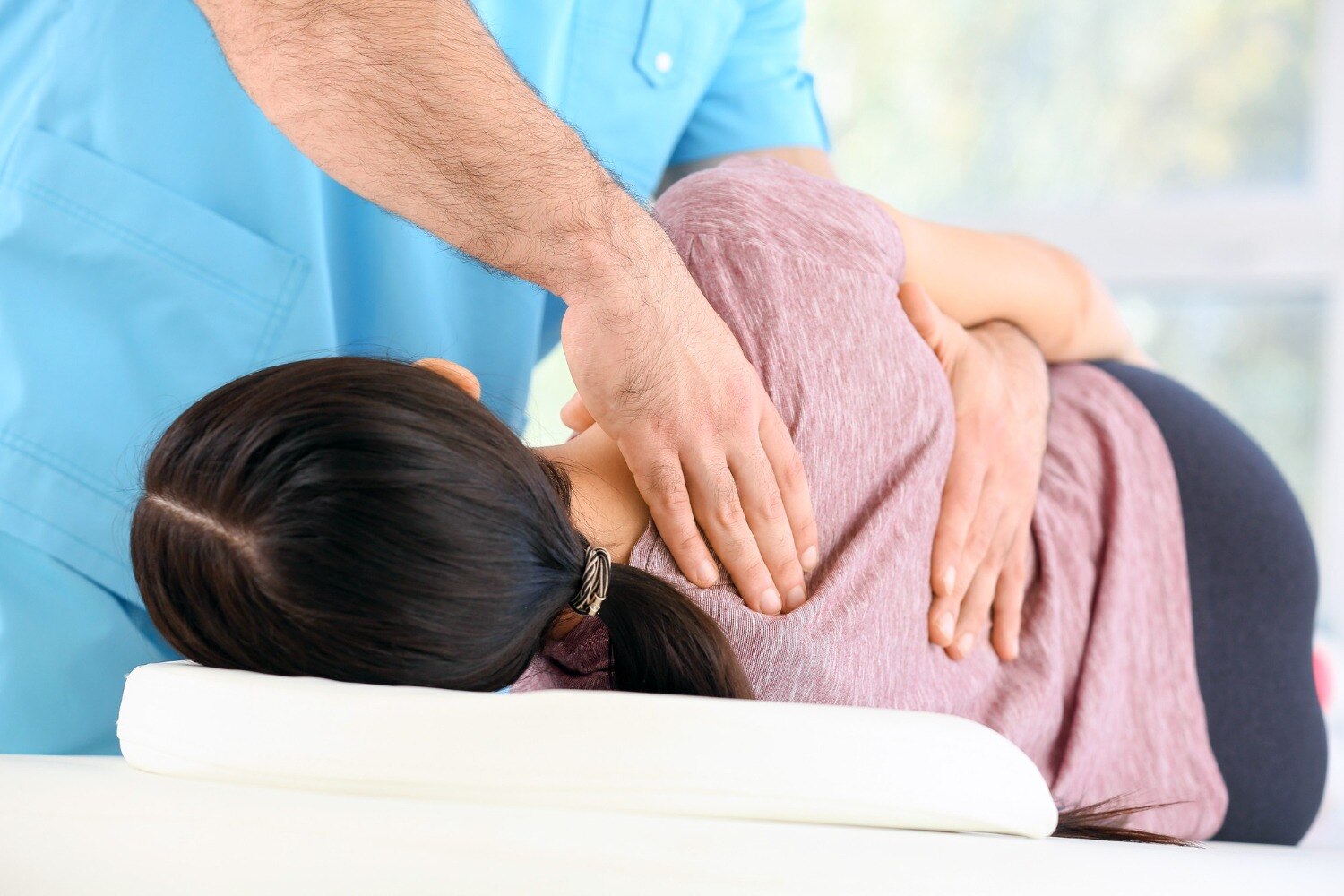
4. You discuss the proposed plan and consent before treatment. Hands-on care might include mobilisation, soft-tissue work, stretching, articulation, muscle-energy techniques or manipulation, selected from the assessment rather than applied as a fixed package.
5. You may also receive exercise advice, activity modifications and a review target, such as walking farther or turning your neck more easily. At PhysioFirstt, ask which finding supports each technique and what you should do between visits.
Mild soreness, fatigue, headache or increased pain can follow treatment. Contact the practitioner if symptoms are severe, persistent or neurological, and expect follow-up frequency to change according to measurable progress rather than a preset course.
Related service
Osteopathy Treatment Osteopathy is a safe, non-invasive, and holistic treatment that focuses on restoring the body's natural balance by improving the function of muscles,... View service → |
How osteopathic techniques differ—and how the choice is made
Choice depends on irritability, available range, strength, symptoms, goals and your response—not on a claim that a joint is “out”. Restricted movement can reflect pain, protective muscle activity, fear of movement or joint irritation.
Osteopathy often combines hands-on care with exercise, education and activity changes; for uncomplicated low-back pain, manual therapy belongs alongside exercise, not as a stand-alone cure.
| Option | What it does | How the choice is made |
|---|---|---|
| Joint mobilisation | Uses slow, graded passive joint movements to reduce stiffness. | Suits irritable restriction when a thrust is unnecessary. |
| Soft-tissue work | Applies pressure or movement to muscles and other soft tissues. | Targets tenderness or muscle guarding; it does not reshape scar tissue. |
| Stretching | Lengthens a muscle or improves tolerance at a movement’s limit. | Uses a comfortable dose when flexibility or confidence limits motion. |
| Articulation and muscle-energy techniques | Articulation rhythmically moves a joint; muscle-energy techniques use your controlled contraction against resistance. | Useful when active participation and gradual range gains are preferred. |
| Manipulation | Delivers a brief, quick, low-amplitude thrust to a selected joint. | Requires clear justification; it does not permanently put a vertebra back into place. |
| Osteopathy | Combines selected hands-on methods with rehabilitation and advice. | Evidence does not show it is superior to other active conservative care. |
| Physiotherapy | Emphasises exercise, progressive loading, function and self-management. | Often suits weakness, recurrent pain or return-to-sport goals. |
| Massage | Primarily works soft tissues for comfort and relaxation. | Offers less assessment-led rehabilitation. |
| Chiropractic treatment | May include spinal manipulation, exercise and education. | Scope and methods vary by practitioner and country. |
| Medical care | Diagnoses disease and can provide medication, injections or surgery. | Takes priority for red flags, neurological loss or suspected non-musculoskeletal illness. |
Why lasting improvement requires active rehabilitation
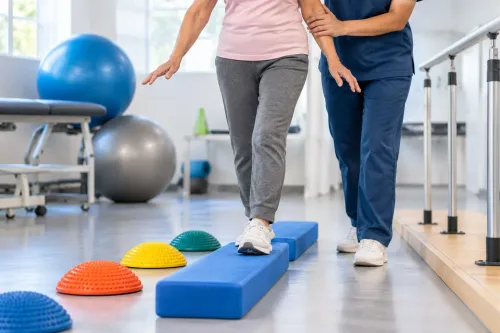
Lasting improvement depends on what you practise between appointments, not on hands-on treatment alone. Follow your prescribed mobility exercises, complete strengthening at the planned frequency, and use graded return to activity rather than waiting for every symptom to disappear. Apply workstation and lifting changes during ordinary tasks, where old movement habits often return.
Measure progress by function, not pain alone. Record a baseline and review it at agreed intervals:
- Walking distance or time before symptoms limit you
- Range of motion, when it affects the task
- Weight lifted, repetitions completed, or lifting tolerance
- Time spent sitting, standing, or working
- A specific work, household, or sport activity you can resume
Pain can fluctuate after exercise, poor sleep, or a stressful day, so a single difficult day does not prove that rehabilitation has failed. Progress means completing more, moving with greater confidence, recovering faster, or needing fewer adjustments.
Evidence does not show osteopathy is superior to other active conservative care. A systematic review of osteopathic manipulative treatment found short-term pain and function improvements for low-back pain, but the studies varied substantially. NICE recommends manual therapy, including mobilisation or manipulation, only within a package that includes exercise for uncomplicated low-back pain.
Passive treatment can ease symptoms, but repeated sessions without exercise, education, or activity goals do not demonstrate that the underlying problem is corrected. Ask for a measurable plan and a review point; change the approach when function is not improving.
How to manage treatment risks and choose a practitioner
A safe decision starts with full disclosure: tell the practitioner about osteoporosis and inflammatory arthritis, recent surgery, pregnancy and blood-clotting disorders, cancer, neurological symptoms, or medicines such as anticoagulants. These details can change the technique, require medical clearance, or rule out treatment.
Ask these questions before agreeing to hands-on care:
- What is your professional registration and experience with my condition?
- Which technique do you propose, and what benefit or risk does it carry?
- Will my plan include exercise and activity advice rather than manipulation alone?
- How will you recognise that I need medical assessment?
| Treatment choice | Main issue to discuss | Sensible decision point |
|---|---|---|
| Mobilisation or soft-tissue work | Usually gentler, but can still aggravate pain | Prefer when you want movement work without thrusting |
| High-velocity neck manipulation | Cervical manipulation risk includes a reported association with cervical artery dissection; the evidence does not prove causation | Request alternatives and informed consent before proceeding |
| Exercise-led care | Requires regular effort between appointments | Choose it when long-term function matters |
Short-term tenderness, increased pain, headache, or fatigue can follow treatment. Contact the practitioner if symptoms are severe, persistent, or worsening; seek urgent help for sudden severe headache, weakness, speech trouble, vision loss, or loss of coordination.
Review progress after two to four sessions using walking distance, range of motion, sleep, work tasks, and pain interference. Stop or change direction if function is not improving, symptoms repeatedly flare, or the explanation depends on claims that a joint was permanently “put back into place.”
Frequently asked questions
When does osteopathy fit restricted movement and when does it not?
It fits mechanical back pain, neck stiffness, joint restriction, muscle tension, and movement-related pain that changes with position or activity. Seek medical assessment first for severe or unexplained symptoms, trauma, fever, progressive weakness, or loss of bladder or bowel control.
What happens during an osteopathy assessment and first appointment?
The practitioner reviews your symptoms, medical history, daily activities, and goals, then observes posture and movement and performs relevant physical tests. They explain the findings, discuss treatment options, and agree on a plan before treatment.
How does the practitioner choose between osteopathic techniques?
The choice depends on examination findings, the painful or restricted area, your health history, treatment goals, and comfort. Techniques can include gentle joint mobilisation, soft-tissue work, stretching, exercise advice, and manipulation when appropriate.
Why is active rehabilitation important after osteopathic treatment?
Hands-on treatment can help movement and symptoms, but strength, mobility, load management, and gradual return to activity address the factors that keep problems recurring.
How can you manage osteopathy risks and choose a practitioner?
Ask about qualifications, registration, assessment findings, expected benefits, alternatives, and risks. Tell the practitioner about medical conditions, medicines, surgery, pregnancy, numbness, weakness, or recent injury, and report any worsening symptoms.