Urinary leakage can happen because the pelvic floor is weak, overactive, poorly coordinated, or unable to relax—not because everyone needs the same set of Kegel exercises. By the end, you will know which incontinence pattern you may be experiencing, what a pelvic floor assessment checks, how exercises are performed safely, and why progress depends on consistent practice and follow-up.
Key takeaways
- Stress incontinence leaks with pressure; urgency incontinence follows a sudden need to urinate.
- A pelvic floor assessment checks muscle strength, relaxation, coordination, and contributing habits.
- Contract the pelvic floor without tightening your abdomen, buttocks, or thighs.
- Track leaks, urgency, fluid intake, and exercises to measure improvement over time.
Which type of urinary incontinence are you experiencing?
The leakage pattern determines treatment: urinary incontinence is not one condition, and the same pelvic-floor exercises do not suit everyone.
| Type | What you notice | How pelvic floor physiotherapy may help |
|---|---|---|
| Stress incontinence | Leakage with coughing, sneezing, running, lifting, or sexual activity | Supervised pelvic-floor-muscle training improves support and pressure control |
| Urge incontinence | A sudden, compelling need to urinate followed by leakage | Bladder training, urge suppression, breathing, and pelvic-floor coordination can reduce urgency |
| Mixed incontinence | Both exertion-related leakage and sudden urgency | Treatment targets the dominant pattern, often combining training and bladder strategies |
| Overflow incontinence | Dribbling, a weak stream, frequent small voids, or difficulty emptying because the bladder remains full | Difficulty emptying needs medical assessment; physiotherapy may address relaxation and coordination after the cause is clarified |
| Functional incontinence | You cannot reach or use the toilet in time because of mobility, pain, cognition, or access problems | Movement, transfer, clothing, and toileting strategies may help, alongside appropriate medical care |
For women with stress incontinence or mixed incontinence, supervised training commonly runs for at least three months and includes at least eight contractions three times daily. For urgency or mixed symptoms, NICE recommends bladder training for at least six weeks, with gradual interval increases and a review of caffeine and fluid habits.
Seek medical assessment for blood in the urine, recurrent infections, pelvic pain, continuous leakage, neurological symptoms, or significant emptying problems.
What happens during a pelvic floor assessment?
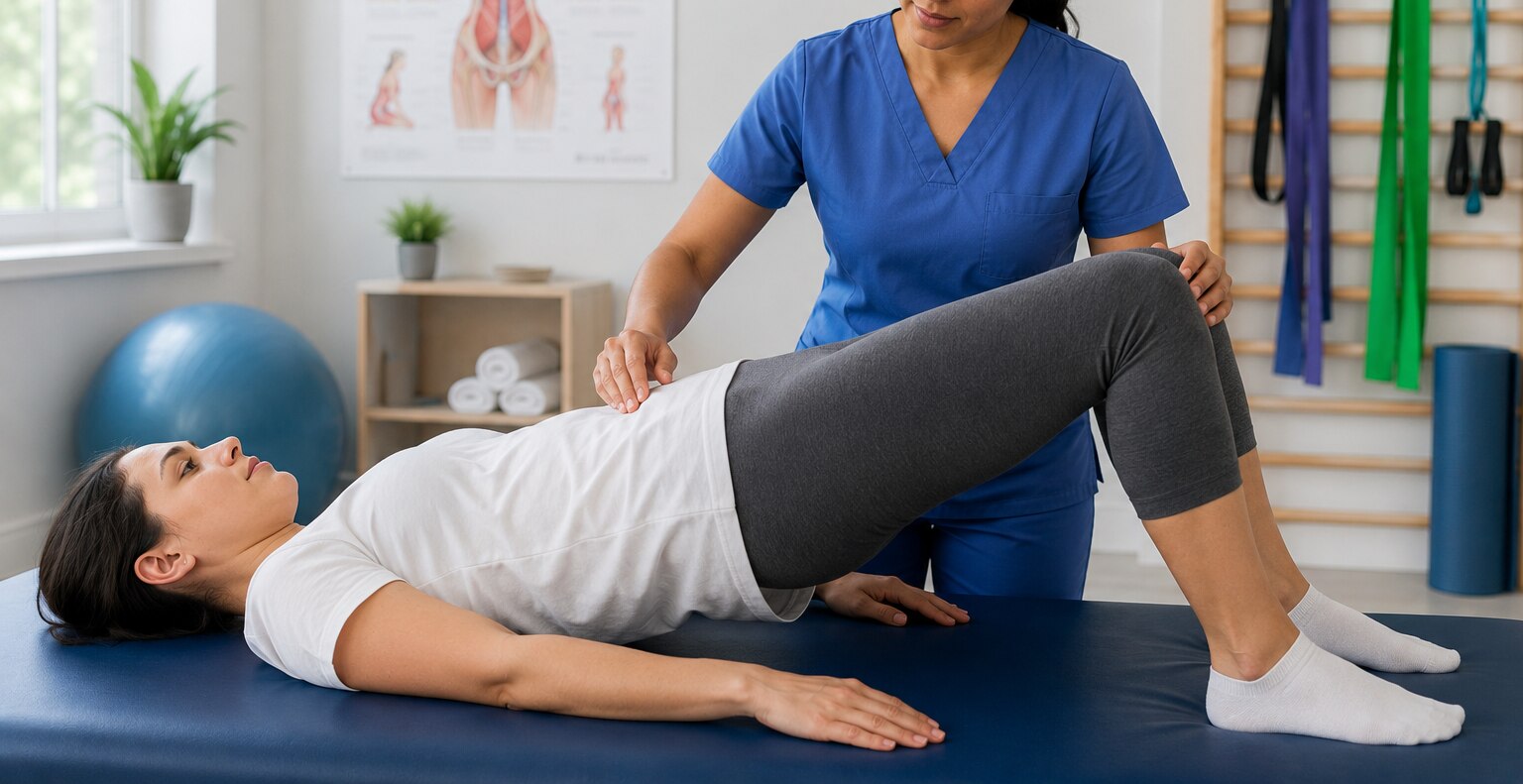
A strong squeeze is not enough to prove that your pelvic floor muscles are working well. During a pelvic floor assessment, the physiotherapist checks whether you can contract, hold, release and coordinate them without holding your breath, bearing down, or tightening your buttocks, thighs or abdomen.
The assessment may include:
- Your leakage pattern, urgency, frequency and difficulty emptying your bladder
- Bowel habits, constipation, straining and pelvic pain
- Pregnancy, childbirth, surgery, medication and relevant medical history
- Breathing, posture, abdominal and hip movement
- A bladder diary or activity that triggers leakage
With your consent, the physiotherapist may perform an internal vaginal examination or internal rectal examination. A gloved finger assesses resting tension, tenderness, contraction strength, endurance, timing and whether the muscles fully relax. You may be asked to cough, squeeze, lift and release so the clinician can see whether pressure is managed or pushed downward.
Weak muscles produce a small or short contraction. Overactive muscles feel tight at rest, hurt when pressed, or fail to lengthen during relaxation; repeated maximal squeezing can worsen those symptoms. Poor coordination appears when the muscles contract too late, relax too slowly, or tighten when you bear down.
At PhysioFirstt, ask the physiotherapist to explain the finding they are treating before using biofeedback or electrical stimulation; these tools are not routine for everyone. Blood in urine, continuous leakage, recurrent infections, pelvic pain or major difficulty emptying your bladder needs medical assessment.
Related service
Physiotherapy Physiotherapy Restore your strength, mobility, and quality of life with professional physiotherapy services tailored to your needs. |
How do you perform pelvic floor exercises correctly?
Start by lying or sitting comfortably and imagine stopping wind while lifting the muscles around the bladder opening inward and upward. Do not practise by repeatedly stopping your urine stream; that can disrupt normal bladder emptying. The correct lift feels internal, not like a squeeze at the skin.
- Relax your abdomen, buttocks and thighs, keep your pelvis still, and breathe normally. Breath holding, bearing down, and buttock and thigh gripping are common substitutions that reduce the training effect.
- Contract gently, then fully release. Begin with a three-second hold followed by at least three seconds of relaxation, building towards ten-second holds without straining.
- Add quick, clean squeezes after the slower contractions. Stop when the lift becomes weaker or you start using other muscles.
- Practise pelvic floor muscle training three times daily. For women with stress or mixed incontinence, supervised programmes commonly prescribe at least eight contractions per session for at least three months.
- Progress from lying to sitting, standing, walking, coughing or lifting only when you can contract and relax accurately. More force is not automatically better.
Kegel exercises are not suitable as repeated maximal squeezes for everyone. Urgency, pelvic pain, constipation-related straining, or difficulty emptying your bladder can involve an overactive pelvic floor; excessive tightening can worsen those symptoms.
Ask a pelvic-health physiotherapist to check contraction, relaxation and coordination if you cannot feel the lift, keep substituting, or leak despite consistent practice. Biofeedback may help when you cannot activate the muscles voluntarily.
What treatment strategies help beyond strengthening?
The right strategy depends on what triggers leakage. Stress leakage needs pressure control during movement; urgency leakage needs bladder calming and timing; mixed leakage needs both approaches, adjusted to the dominant pattern.
A bladder diary covering at least three days records voiding times, estimated volumes, drinks, urgency and leakage. It can reveal precautionary toilet visits, evening caffeine or long gaps between drinks. For urgency or mixed incontinence, bladder training over at least six weeks gradually extends the interval between planned voids.
Urge suppression uses stillness, slow breathing and gentle pelvic-floor contractions until the compelling urge settles.
Breathing matters because breath-holding sharply increases abdominal pressure. Exhale through a cough, lift or stand, while learning to relax the pelvic floor between contractions; repeated maximal squeezing can worsen urgency or difficulty emptying when the muscles are already overactive.
Other measures target the trigger directly:
- Constipation management reduces straining and bowel pressure. Treat constipation management as part of continence care, alongside adequate fluids, fibre and medical advice when needed.
- Posture and lifting technique reduce sudden downward pressure: keep the load close, hinge at the hips, and breathe out during effort.
- Strengthening helps stress leakage when contractions are weak or poorly timed. Progress from controlled squeezes to coughing, lifting, running or sport, rather than practising force alone.
- Relaxation and coordination help urgency, pelvic pain or incomplete emptying when the muscles cannot release normally.
A physiotherapist matches these strategies to your diary, examination findings and real-life triggers.
How long does improvement take, and how do you track it?
Expect change over several weeks, not after one appointment. For women with stress or mixed incontinence, supervised training is usually prescribed for at least three months; after radical prostate surgery, post-prostatectomy incontinence training commonly continues for at least three months after catheter removal, following the clinical plan. Daily repetition matters more than force.
Use urinary leakage tracking to compare your baseline with each week and identify triggers. Record:
- The number of leaks and whether coughing, lifting, exercise, urgency, or sleep preceded them
- Urgency episodes, toilet visits, fluid intake, and nighttime urination
- Whether you completed the prescribed contractions and which activities felt difficult
A follow-up is useful when progress stalls, technique feels uncertain, or leakage changes. The physiotherapist can reassess contraction, relaxation, coordination, functional triggers, and exercise dose. Biofeedback can show whether you are contracting the intended muscles, and training can progress from isolated contractions to coughing, lifting, running, or sport when control improves.
Do not increase repetitions if you hold your breath, bear down, develop pelvic pain, or cannot relax fully.
Persistent leakage deserves medical assessment when it remains unchanged despite consistent practice and review. Seek prompt assessment for blood in urine, recurrent urinary-tract infections, pelvic pain, significant difficulty emptying the bladder, suspected neurological disease, or continuous leakage. These signs can require urine tests, bladder investigations, medication review, or referral beyond physiotherapy.
Frequently asked questions
Which type of urinary incontinence are you experiencing?
Stress incontinence causes leakage during coughing, sneezing, lifting, or exercise. Urgency incontinence follows a sudden, difficult-to-delay need to urinate. Mixed incontinence combines both patterns.
What happens during a pelvic floor assessment?
The assessment reviews your leakage pattern, bladder habits, medical history, breathing, posture, and movement. Your physiotherapist may assess pelvic floor contraction, relaxation, strength, and coordination with your consent.
How do you perform pelvic floor exercises correctly?
Identify the muscles used to stop gas or urine, then gently lift and squeeze without holding your breath or tightening your abdomen, buttocks, or thighs. Relax fully between contractions, and do not practise by stopping urine midstream.
What treatment strategies help beyond strengthening?
Treatment can include bladder training, urge-suppression techniques, breathing and pressure-management work, toileting and fluid-habit changes, relaxation training, and rehabilitation for contributing hip, back, or abdominal problems.
How long does improvement take, and how do you track it?
Track leaks, urgency episodes, toilet visits, fluids, triggers, and exercise sessions in a bladder diary. Improvement depends on the cause, consistency, and associated problems, so review progress with your physiotherapist.