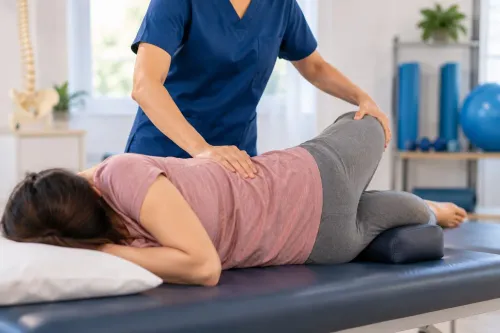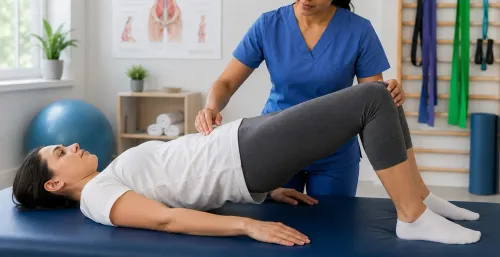
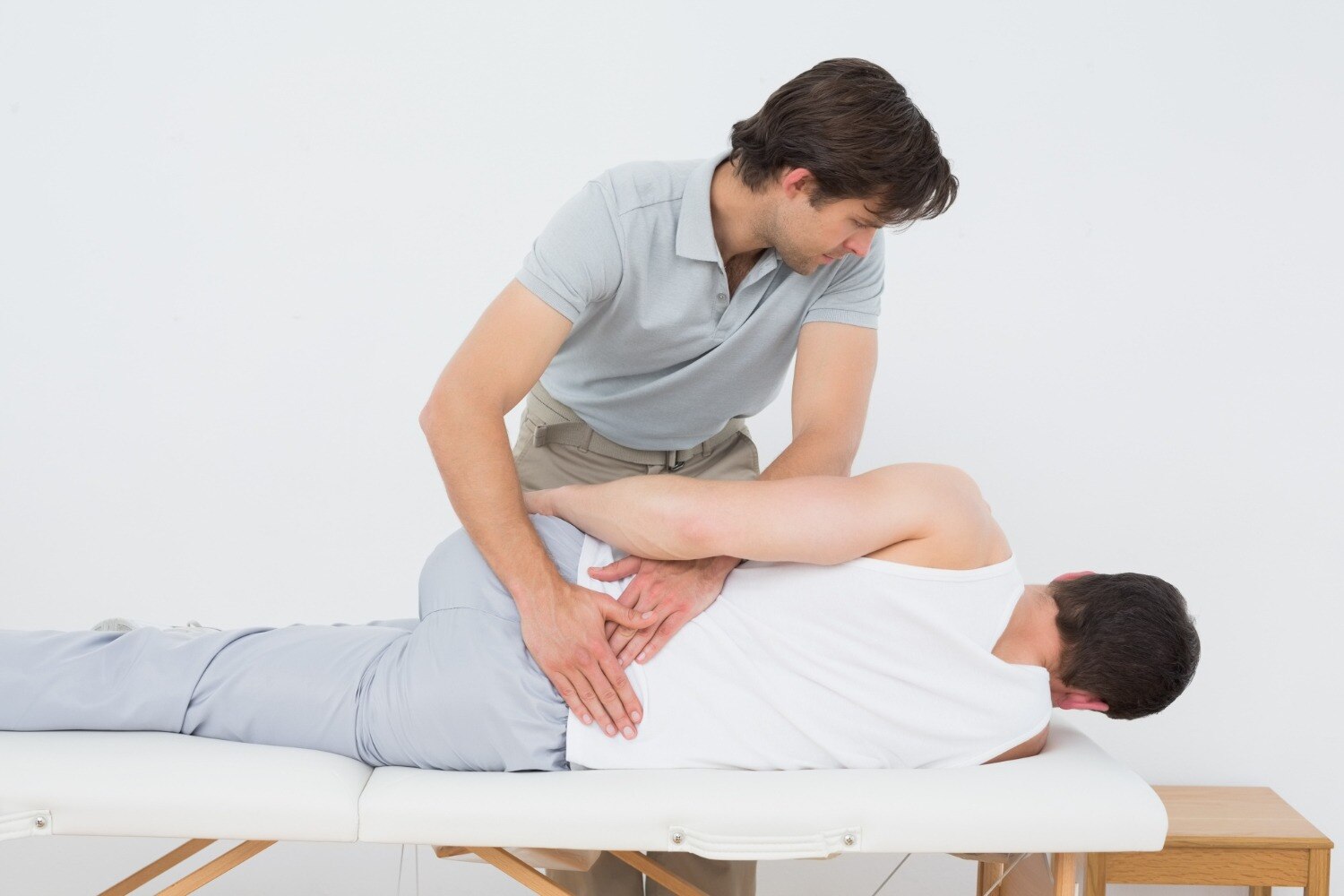
Tight muscles and stiff joints can feel alike, but restricted movement can also come from pain-related guarding, swelling, weakness, nerve irritation, or injury. You will learn how clinicians distinguish these causes, what hands-on treatment involves, when it is unsafe, and how to turn short-term relief into measurable functional progress.
Key takeaways
- Manual therapy improves movement; it does not physically realign your posture or joints.
- A clinician checks pain, muscle guarding, joint stiffness, and strength before choosing techniques.
- Use manual therapy alongside exercises to help mobility improvements last.
- Seek medical assessment first for unexplained swelling, severe pain, numbness, or sudden weakness.
What manual therapy actually includes—and what it can change
Manual therapy is hands-on treatment aimed at making movement easier, not physically “putting” a joint or posture back into place. A clinician may use pressure, guided movement, stretching, or a quick thrust, depending on whether pain, guarding, muscle sensitivity, or joint stiffness limits you.
| Technique | What the clinician does | Realistic change |
|---|---|---|
| Joint mobilisation | Moves a joint through repeated, controlled ranges, from gentle oscillations to firmer glides | Temporary relief and improved range of motion |
| Soft-tissue massage | Applies pressure and strokes to muscles and connective tissues | Reduced tenderness or pain and easier movement for some people |
| Trigger-point work | Uses focused pressure on a particularly sensitive spot in a muscle | Short-term reduction in local sensitivity and protective tension |
| Stretching or assisted movement | Takes a limb through a range you cannot comfortably reach alone | Greater movement confidence and tolerance |
| Manipulation | Delivers a brief, rapid, controlled joint movement | A possible short-term change in pain or motion, not proof of corrected alignment |
Expect a useful window for moving, exercising, or returning to activity—not a guaranteed cure. Benefits can reflect changed pain sensitivity, confidence, and movement tolerance as well as local mechanical effects. For persistent pain, track pain, range of motion, strength, activity, and function; change the plan if they do not improve.
For nonspecific low-back pain, manual therapy belongs with exercise, not as a stand-alone treatment.
How a clinician finds the cause of restricted movement
Before hands-on treatment, the clinician should explain the assessment and ask what movement is limited, when it began, what worsens it, and how it affects work, sleep, walking, or sport. The aim is to identify the driver, not simply label the area “tight.”
- They observe posture, swelling, bruising, muscle wasting, and how you sit, stand, walk, squat, or reach.
- They measure active range of motion: you move the joint yourself, showing pain, fear, weakness, and the movement you can control.
- They test passive range of motion: the clinician moves the relaxed joint. A large difference between active and passive movement can point to weakness or pain-related guarding; restriction in both raises concern about joint stiffness, swelling, or structural limitation.
- They perform strength testing against resistance and compare both sides.
- They complete neurological screening, checking sensation, reflexes, coordination, and nerve-related weakness when symptoms suggest irritation or compression.
The clinician also checks for fever, unexplained weight loss, night pain, inflammatory symptoms, major trauma, deformity, suspected fracture or dislocation, progressive numbness or weakness, and bladder or bowel changes. These findings need medical assessment before routine manual therapy; a hands-on examination cannot rule out every serious cause.
For uncomplicated low-back pain, routine imaging is not automatic. It is considered when the result is likely to change management.
When manual therapy is suitable—and when it is the wrong first step
Manual therapy is a suitable first-line adjunct when movement is limited by muscle tightness, joint stiffness, or pain-related guarding rather than an unexplained injury. It fits symptoms that are reproducible with movement, improve with gentle loading, and interfere with activities such as walking, reaching, turning, or exercise.
A posture or asymmetry alone does not prove that a joint needs correction; the finding must relate to your symptoms, history, loading, and goals.
| Pattern | Manual therapy may fit | Medical assessment comes first |
|---|---|---|
| Movement restriction | Gradual loss of range with familiar muscle or joint pain | Sudden loss of movement after a fall, collision, or twist |
| Pain behaviour | Symptoms settle with comfortable movement and do not steadily worsen | Severe, escalating, unexplained, or night-dominant pain |
| Local findings | Mild tenderness, stiffness, or muscle guarding without systemic illness | Fever, a hot swollen joint, unexplained weight loss, or a history of cancer |
| Nerve symptoms | Brief, stable irritation without weakness | Progressive weakness, spreading numbness, loss of coordination, or saddle numbness |
| Injury risk | No deformity or focal bone tenderness | Fracture red flags, inability to bear weight, visible deformity, or marked bony tenderness |
Defer manipulation and seek assessment after major trauma or when infection, inflammatory disease, blood clot, malignancy, or severe nerve compression is possible. New bladder or bowel loss requires urgent care. Neck symptoms with dizziness, double vision, fainting, speech trouble, or neurological changes need medical screening before any high-velocity cervical technique.
What a treatment session feels like and how clinicians manage risk
Firm pressure should feel tolerable, not sharp, burning, electric, or intolerably painful. You can remain clothed for much of the session; wear loose clothing, and expect the clinician to expose only the area being treated while maintaining appropriate draping. A first appointment often includes assessment, hands-on treatment, and exercise instruction, so treatment time varies.
Ask how long the hands-on portion will last.
Before touching you, the clinician should explain the proposed technique, likely sensations, expected benefit, alternatives, and risks, then obtain your consent. You can withdraw consent or ask for less pressure at any point. Joint mobilisation, massage, stretching, assisted movement, and manipulation should be adjusted to your response rather than forced through resistance.
Tell the clinician immediately if you feel:
- Sharp pain, numbness, tingling, weakness, or pain spreading into an arm or leg
- Dizziness, faintness, visual changes, speech difficulty, or a severe unusual headache
- Chest pain, breathlessness, or symptoms that feel different from your usual problem
Temporary treatment soreness, stiffness, or a headache can follow mobilisation or manipulation and often settles. Serious complications are rare, but treatment is not risk-free. High-velocity cervical manipulation needs particular caution; the clinician should screen for neurological and vascular warning signs and choose a lower-risk option when appropriate.
Afterward, gentle movement and prescribed exercise help maintain the gain; report worsening symptoms rather than pushing through them.
How to make movement gains last and judge whether treatment works
Manual therapy should be a short-term aid that makes exercise and daily movement easier, not a stand-alone solution. Use the improved range or reduced pain to practise mobility exercises, then build strengthening and motor control so your body can tolerate the movement without repeated hands-on treatment.
Keep moving within tolerable limits. For uncomplicated low-back pain, continue normal activities rather than resting in bed; use activity modification to reduce aggravating loads temporarily, then restore lifting, walking, work, or sport in stages. NICE recommends manual therapy for nonspecific low-back pain only within a package that includes exercise, with or without psychological therapy.
Track the same measures at baseline and after a defined period, such as two to four weeks. A useful plan at PhysioFirstt should record these starting points and state what change would justify continuing, progressing, or changing treatment.
| Measure | How to track it | Evidence the plan is helping |
|---|---|---|
| Pain | Rate usual and worst pain from 0 to 10 | Lower pain during the activity that matters to you |
| Range of motion | Record degrees, distance, or a repeatable movement test | More movement without increased symptoms afterward |
| Strength | Compare repetitions, resistance, or side-to-side performance | Higher load or better control with the same pain level |
| Activity | Log walking time, work tasks, training, or sleep disruption | Longer duration or fewer interruptions |
| Function | Repeat a task such as stairs, reaching, or dressing | The task becomes easier, faster, or more independent |
If pain, movement, strength, and function remain unchanged, ask for reassessment rather than booking indefinite passive treatment.
Related services
Physiotherapy Physiotherapy Restore your strength, mobility, and quality of life with professional physiotherapy services tailored to your needs. |
Osteopathy Treatment Osteopathy is a safe, non-invasive, and holistic treatment that focuses on restoring the body's natural balance by improving the function of muscles,... View service → |
Frequently asked questions
What can manual therapy change?
Manual therapy can reduce pain sensitivity, muscle guarding, and joint stiffness, making movement easier. It does not permanently put a joint or posture back into place.
How does a clinician identify the cause of restricted movement?
The clinician reviews your symptoms, checks active and passive movement, compares strength and control, and looks for pain, guarding, or joint stiffness.
When is manual therapy the wrong first step?
Seek medical assessment first for unexplained swelling, severe or sudden pain, numbness, progressive weakness, fever, recent major trauma, or suspected fracture.
What happens during a manual therapy session?
The clinician explains the technique, checks your response, and uses pressure, guided movement, stretching, or a thrust when appropriate. You should report sharp, escalating, or unusual symptoms.
How can you make manual therapy results last?
Follow the prescribed mobility, strengthening, and activity plan, then track movement, pain, and daily function to judge whether treatment is helping.